Go Back
- 8 oz rice noodles - 1 cup shredded red cabbage - 1 cup shredded carrots - 1 red bell pepper, thinly sliced - 1 cucumber, julienned - 1/2 cup fresh cilantro, chopped - 1/4 cup green onions, thinly sliced - 1/2 cup unsalted peanuts, roughly chopped - 1 tablespoon sesame oil For the Peanut Sauce: - 1/2 cup creamy peanut butter - 2 tablespoons soy sauce - 2 tablespoons maple syrup - 1 tablespoon lime juice - 1 tablespoon sesame oil - 1 teaspoon freshly grated ginger - 1 teaspoon sriracha (adjust according to your spice preference) - 2-3 tablespoons water (to adjust consistency) - You can swap fresh vegetables for others like bell peppers or snap peas. - For nut-free options, use sunbutter or tahini in place of peanut butter. - To make it gluten-free, choose gluten-free soy sauce or tamari. - Each serving has about 400 calories. - It contains 15g of protein, 18g of fat, and 50g of carbs. - The fresh veggies offer vitamins and fiber, boosting health and digestion. {{ingredient_image_2}} Start by boiling a large pot of water. Make sure it’s at a rolling boil. Add the rice noodles to the water. Cook them based on the package instructions. Usually, this takes about 4 to 6 minutes. Check for doneness; they should be al dente. Once cooked, drain the noodles in a colander. Rinse them under cold running water. This stops the cooking process and cools them down quickly. Set the noodles aside in a large bowl. Next, gather your fresh vegetables. Chop the red cabbage into thin strips. Shred the carrots and slice the red bell pepper. Julien the cucumber into thin sticks. In a large mixing bowl, combine the cabbage, carrots, bell pepper, cucumber, cilantro, and green onions. Toss everything gently to mix. For the best flavor, try to use fresh vegetables. They add crunch and color to your salad. Now it's time to make the peanut sauce. In a medium bowl, add the creamy peanut butter, soy sauce, maple syrup, lime juice, and sesame oil. Grate some fresh ginger and add it in. If you like some heat, add sriracha. Whisk the mixture until smooth and creamy. If the sauce is too thick, add water, one tablespoon at a time. Keep whisking until you get the right consistency. You want it pourable but not runny. To make this Thai Peanut Noodle Salad shine, focus on texture. Use fresh, crisp veggies. Shredded cabbage and carrots add crunch. Slice bell peppers thinly for a nice bite. Rinse the noodles in cold water. This keeps them firm and prevents clumping. Balancing flavors is key. The sauce needs salt, sweetness, and tang. Adjust the soy sauce and maple syrup to your taste. A squeeze of lime adds brightness. Don't forget the sriracha for a spicy kick. Start with a little and add more if you like it hot. Presentation makes your dish pop. Serve the salad in a large, shallow bowl. Top it with extra cilantro and sesame seeds for color. You can also use clear bowls to show off the vibrant layers. Pair this salad with grilled chicken or shrimp for a hearty meal. It also goes well with spring rolls or a light soup. These sides complement the salad's flavors perfectly. You can prepare this salad in advance. Cook the noodles and chop the veggies a day before. Keep each component separate until you are ready to serve. This keeps the salad fresh and crisp. Store leftovers in an airtight container. Eat within 2 to 3 days for the best flavor. If you want to keep the crunch, store the sauce separately. Just mix it in when you're ready to enjoy your meal. Pro Tips Use Fresh Veggies: Always opt for fresh, crisp vegetables to enhance the crunch and flavor of your salad. Adjust the Spice: Feel free to modify the amount of sriracha in the peanut sauce to suit your spice tolerance. Perfect Noodle Texture: Rinse the noodles under cold water immediately after cooking to stop the cooking process and prevent sticking. Garnish for Flavor: Adding extra peanuts and cilantro on top not only enhances the presentation but also adds layers of flavor to the dish. {{image_4}} You can add proteins to make your salad more filling. Great options include chicken, tofu, or shrimp. - Chicken: Cook chicken breast in a pan until it's golden. Slice it thin and toss it in. - Tofu: Press tofu to remove water, then cut it into cubes. Sauté until golden brown. - Shrimp: Cook shrimp in a pan with a bit of oil until they turn pink. Each protein gives a different texture and taste. Choose one based on your preference! You can adjust the spice level of the sauce to fit your taste. Start with the sriracha and add more if you like heat. - Mild: Use less sriracha or leave it out. - Medium: Add the one teaspoon of sriracha. - Hot: Add extra sriracha or include crushed red pepper flakes. For different flavors, try adding lime zest or a splash of rice vinegar. These add a nice kick without too much heat! Using seasonal vegetables can make your salad even more vibrant. Fresh veggies change with the seasons. - Spring: Add snap peas or radishes for crunch. - Summer: Toss in cherry tomatoes or zucchini for freshness. - Fall: Use roasted sweet potatoes or butternut squash for warmth. You can also switch up the dressing. Instead of peanut sauce, try a light vinaigrette or a sesame dressing. This keeps the dish exciting all year long! To keep your Thai Peanut Noodle Salad fresh, store leftovers in an airtight container. This helps prevent drying out and keeps flavors intact. You can enjoy the salad for up to three days in the fridge. After that, the veggies might lose their crunch. You can freeze Thai Peanut Noodle Salad, but it may change texture. The noodles might become mushy after thawing. To freeze, place the salad in a freezer-safe container. When ready to eat, thaw it overnight in the fridge. For best results, serve it cold. If you want to reheat the salad, do so carefully. Use the microwave on low power for about 30 seconds. Stir and check the temperature. Avoid high heat to keep the veggies crisp. After reheating, top it with fresh peanuts and a drizzle of sesame oil for flavor. The best noodles for Thai Peanut Noodle Salad are rice noodles. They cook quickly and give the salad a nice, soft texture. You can use thin vermicelli or wider rice noodles, depending on your taste. Both work well with the rich peanut sauce and fresh veggies. Yes, you can easily make this salad vegan. Use soy sauce or tamari as a substitute for any non-vegan ingredients. The peanut sauce is already vegan-friendly. Just make sure to check the labels on your sauces and noodles. The peanut sauce lasts about one week in the fridge. Store it in an airtight container to keep it fresh. If it thickens, just add a little water and mix well before using. Absolutely! To make this salad gluten-free, use gluten-free soy sauce or tamari. Rice noodles are naturally gluten-free, making them a great choice for this dish. Always check labels for gluten-free assurance. You can serve the salad warm, but it’s best chilled. The cold noodles and fresh veggies create a nice contrast with the warm sauce. If you prefer it warm, just toss everything together right after cooking the noodles. This article covered how to make a delicious Thai Peanut Noodle Salad. We discussed the key ingredients, possible substitutions, and the nutrition benefits. I shared simple steps for cooking and preparing the salad, along with tips for perfect flavor and texture. You also learned about storage and how to modify the recipe based on your taste. Enjoy making this salad! Experiment with different flavors and ingredients. You'll find a version you love. Make it your own and savor every bite!

Thai Peanut Noodle Salad

A refreshing and flavorful salad featuring rice noodles, fresh vegetables, and a creamy peanut sauce.
Prep Time 15 minutes
Cook Time 15 minutes
Total Time 30 minutes
Course Main Course
Cuisine Thai
Servings 4
Calories 400 kcal

Ingredients
  

  • 8 oz rice noodles
  • 1 cup shredded red cabbage
  • 1 cup shredded carrots
  • 1 medium red bell pepper, thinly sliced
  • 1 medium cucumber, julienned
  • 1/2 cup fresh cilantro, chopped
  • 1/4 cup green onions, thinly sliced
  • 1/2 cup unsalted peanuts, roughly chopped
  • 1 tablespoon sesame oil
  • 1/2 cup creamy peanut butter
  • 2 tablespoons soy sauce
  • 2 tablespoons maple syrup
  • 1 tablespoon lime juice
  • 1 tablespoon sesame oil
  • 1 teaspoon freshly grated ginger
  • 1 teaspoon sriracha
  • 2-3 tablespoons water

Instructions
 

  • Cook the noodles: Bring a large pot of water to a rolling boil. Add the rice noodles and cook according to the package directions until they are just al dente. Once cooked, drain the noodles and rinse them under cold running water to halt the cooking. Set the noodles aside in a large bowl.
  • Prepare the vegetables: In a separate mixing bowl, combine the shredded red cabbage, shredded carrots, thinly sliced red bell pepper, julienned cucumber, chopped cilantro, and sliced green onions. Toss the vegetables gently to mix them evenly.
  • Make the peanut sauce: In a medium bowl, combine the creamy peanut butter, soy sauce, maple syrup, lime juice, sesame oil, freshly grated ginger, and sriracha. Whisk the mixture until smooth. If the sauce seems too thick, gradually add water, one tablespoon at a time, whisking until you achieve the desired consistency.
  • Combine the salad: Add the cooked rice noodles to the bowl of mixed vegetables. Pour the prepared peanut sauce over both the noodles and vegetables. Using tongs or a large spoon, gently toss everything together until all ingredients are well-coated with the sauce.
  • Serve: Portion the salad into individual bowls or plates. For added texture and flavor, sprinkle the top with the roughly chopped peanuts. Drizzle with extra sesame oil if desired for a richer flavor profile.

Notes

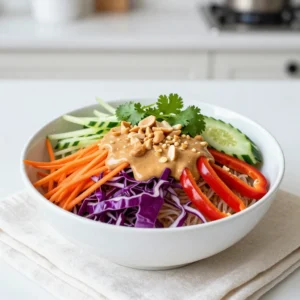
For an eye-catching presentation, serve the salad in a large, shallow bowl, garnished with extra cilantro leaves and a light sprinkle of sesame seeds.
Keyword noodles, peanut sauce, salad, vegetarian