

Are you ready to boost your health with a warm bowl of comfort? My Veggie Packed Minestrone Soup is bursting with fresh vegetables and rich flavors, perfect for a nourishing meal. In this post, I’ll share the best ingredients that pack a punch, easy step-by-step instructions, and smart tips to make this soup a family favorite. Let’s dive in and discover how healthy eating can be simple and delicious!
Why I Love This Recipe
- Packed with Nutrients: This minestrone soup is loaded with a variety of vegetables, making it a nutritious choice that is both satisfying and wholesome.
- Customizable: You can easily modify this recipe based on your favorite vegetables or whatever you have on hand, making it versatile for any season.
- Easy to Make: With straightforward steps and minimal prep time, this soup is perfect for busy weeknights or meal prep sessions.
- Comfort in a Bowl: There's something incredibly comforting about a warm bowl of minestrone soup, perfect for cozy evenings or when you're feeling under the weather.
Ingredients
List of Ingredients with Quantities
- 1 tablespoon olive oil
- 1 medium onion, diced
- 2 cloves garlic, minced
- 1 medium carrot, diced
- 1 rib celery, diced
- 1 zucchini, diced
- 1 cup green beans, trimmed and cut into 1-inch pieces
- 1 cup fresh spinach, chopped
- 1 can (15 oz) diced tomatoes with juices
- 4 cups vegetable broth (preferably low-sodium)
- 1 cup canned kidney beans, rinsed and drained
- 1 teaspoon dried oregano
- 1 teaspoon dried basil
- Salt and freshly ground black pepper to taste
- 1 cup small pasta (like ditalini or elbow macaroni)
- Grated Parmesan cheese (optional, for garnish)
Benefits of Each Ingredient
- Olive oil: Adds healthy fats that support heart health.
- Onion: Contains antioxidants and adds flavor.
- Garlic: May boost the immune system and adds a strong taste.
- Carrot: Rich in beta-carotene, good for vision and skin.
- Celery: Low in calories, helps with hydration and digestion.
- Zucchini: Full of fiber, aids digestion, and keeps you full.
- Green beans: Packed with vitamins and minerals, support bone health.
- Spinach: High in iron and vitamins, boosts energy levels.
- Diced tomatoes: Provide vitamins C and K, good for heart health.
- Vegetable broth: Adds flavor and keeps the soup light.
- Kidney beans: High in protein and fiber, which helps with fullness.
- Oregano and basil: Add flavor and may have anti-inflammatory properties.
- Salt and pepper: Enhance the taste of the soup.
- Small pasta: Adds texture and makes the soup more filling.
- Parmesan cheese: Adds a savory finish, but is optional.
Any Recommended Ingredient Substitutions
- Use coconut oil instead of olive oil for a different flavor.
- Swap onion with shallots for a milder taste.
- Try leeks instead of garlic for a sweeter flavor.
- Replace carrots with sweet potatoes for a sweeter soup.
- Use cabbage instead of celery for a crunchier texture.
- Substitute green beans with peas for a sweeter taste.
- Replace spinach with kale for a heartier green.
- Use canned black beans instead of kidney beans for variety.
- Choose vegetable stock if you want a richer flavor.
- For pasta, gluten-free options work well too!
Step-by-Step Instructions
Preparation Steps Overview
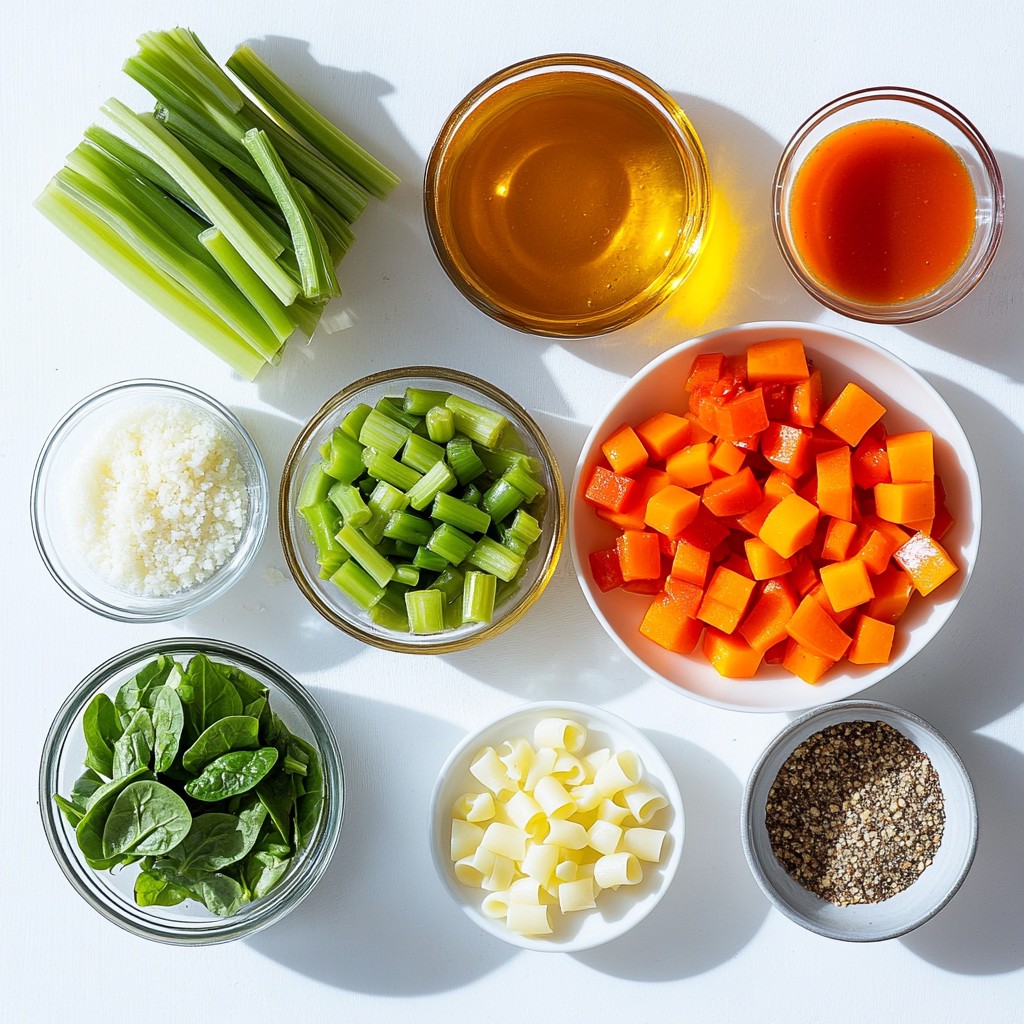
To make this soup, start by gathering your ingredients. You will need olive oil, onion, garlic, carrot, celery, zucchini, green beans, spinach, diced tomatoes, vegetable broth, kidney beans, herbs, salt, pepper, and pasta. Chop all the veggies before cooking. This makes the process fast and simple.
Detailed Cooking Process
1. Heat the Oil: Pour olive oil into a large pot over medium heat.
2. Sauté the Aromatics: Add the diced onion. Cook it for about 5 minutes until soft. Stir occasionally to keep it from burning.
3. Add Garlic: Mix in the minced garlic. Let it cook for 1 minute until it smells great.
4. Include Carrots and Celery: Toss in the diced carrot and celery. Cook for 3-4 minutes until soft. Stir well.
5. Incorporate Zucchini and Green Beans: Add diced zucchini and green beans. Cook for another 5 minutes, stirring often.
6. Pour in the Tomatoes and Broth: Add the diced tomatoes with juices and vegetable broth. Bring the soup to a boil.
7. Season and Simmer: Once it boils, stir in kidney beans, oregano, basil, salt, and pepper. Lower the heat and let it simmer for 10 minutes.
8. Cook the Pasta and Spinach: Add the small pasta and chopped spinach. Cook until the pasta is al dente, about 7-10 minutes. Stir to prevent sticking.
9. Final Taste Test: Taste the soup. Adjust the seasonings as needed.
10. Serve Warm: Ladle the soup into bowls. Top with Parmesan cheese if you like.
Cooking Times for Each Step
- Heating oil: 2 minutes
- Sautéing onion: 5 minutes
- Cooking garlic: 1 minute
- Softening carrots and celery: 3-4 minutes
- Cooking zucchini and green beans: 5 minutes
- Boiling with tomatoes and broth: 2 minutes
- Simmering with seasonings: 10 minutes
- Cooking pasta and spinach: 7-10 minutes
- Taste testing and serving: 2 minutes
This soup is a great way to enjoy many veggies in one bowl!
Tips & Tricks
How to Enhance Flavor
To boost the taste of your minestrone soup, use fresh herbs. Fresh basil and parsley add a bright kick. You can also add a splash of lemon juice for a zesty twist. Try using homemade vegetable broth instead of store-bought. This adds depth and richness. Finishing the soup with a drizzle of good olive oil can elevate the flavor profile.
Common Mistakes to Avoid
One common mistake is overcooking the vegetables. Keep them tender-crisp for the best texture. Avoid using too much salt early on; it can overpower the soup. Instead, season gradually as you cook. Another mistake is adding pasta too early, which can lead to mushy pasta. Cook it just until it’s al dente for the best result.
Recommended Tools and Equipment
For this soup, you need a large pot or Dutch oven for even cooking. A good cutting board and sharp knife make prep easy. A wooden spoon is great for stirring without scratching your pot. Use measuring cups for accuracy, especially for the broth and pasta. Finally, keep a ladle handy for serving up your delicious creation.
Pro Tips
- Use Fresh Vegetables: For the best flavor and nutrition, opt for fresh vegetables instead of frozen. Seasonal produce gives the soup a vibrant taste.
- Adjust the Seasoning: Always taste your soup before serving. Adjust salt, pepper, or herbs to suit your preference, since different broth brands have varying salt levels.
- Add a Kick: If you enjoy a bit of spice, consider adding a pinch of red pepper flakes or a dash of hot sauce to elevate the flavor profile.
- Store Properly: To keep leftovers fresh, store the soup and pasta separately. This prevents the pasta from soaking up too much broth and becoming mushy.
Variations
Vegetarian and Vegan Adaptations
You can easily make this soup vegetarian or vegan. Just skip the Parmesan cheese. Use vegetable broth to keep it plant-based. This soup is already packed with veggies, so you’re off to a great start. You can also add more beans for protein. Try chickpeas or black beans instead of kidney beans.
Seasonal Vegetable Swaps
This minestrone soup is flexible. You can swap out vegetables based on the season. In the fall, add butternut squash or sweet potatoes. In the summer, toss in corn or bell peppers. Use what’s fresh and available. This keeps the soup fun and new every time you make it.
Alternative Pasta Choices
You can choose different pasta shapes for your soup. While ditalini is great, try using whole wheat pasta for added fiber. Gluten-free pasta also works well if you need a gluten-free option. Just adjust the cooking time based on the type of pasta you use. Remember, the key is to keep it tasty and enjoyable!
Storage Info
Best Practices for Refrigerating
To keep your veggie-packed minestrone soup fresh, store it in an airtight container. Make sure it cools down before sealing. It can last in the fridge for up to five days. Always label your container with the date. This helps you track how long it has been stored. When reheating, check for any off smells or changes in texture.
Freezing Instructions and Tips
You can freeze minestrone soup for up to three months. Use freezer-safe bags or containers. Leave some space at the top of your containers for expansion. If you plan to add pasta, consider leaving it out before freezing. It tends to get mushy when thawed. When you are ready to eat, thaw it overnight in the fridge or use the microwave.
Reheating Instructions
To reheat, pour the soup into a pot over medium heat. Stir it often to avoid sticking. You can also use the microwave. Heat in short bursts, stirring in between. Make sure it reaches an internal temperature of 165°F before serving. If it thickens too much, add a splash of vegetable broth or water to loosen it.
FAQs
Can I make this soup ahead of time?
Yes, you can make this soup ahead of time. It stores well in the fridge. The flavors improve after a day. Just cool it down before storing. Use an airtight container to keep it fresh. When you are ready to eat, reheat it on the stove or in the microwave.
How can I make the soup spicier?
To spice up your minestrone, add red pepper flakes or chopped jalapeños. You can also include a dash of hot sauce while cooking. If you want a deeper flavor, try adding smoked paprika. Start with small amounts and taste as you go. Adjust to your spice preference for the best results.
What can I serve with minestrone soup?
Minestrone soup pairs well with crusty bread or a fresh salad. You can also serve it with cheese toast for extra flavor. A sprinkle of grated Parmesan on top adds a nice touch. For a light meal, serve it with a side of roasted vegetables. These choices enhance the soup and make it more filling.
In this post, we explored the key ingredients for minestrone soup. Each ingredient adds unique benefits, and I shared helpful tips on substitutions. We covered easy preparation steps and detailed cooking times. I also shared ways to enhance the flavor while avoiding common mistakes. Lastly, I talked about different variations and storage tips. Remember, minestrone soup is versatile. Feel free to make it your own! Enjoy cooking and tasting this comforting dish.