
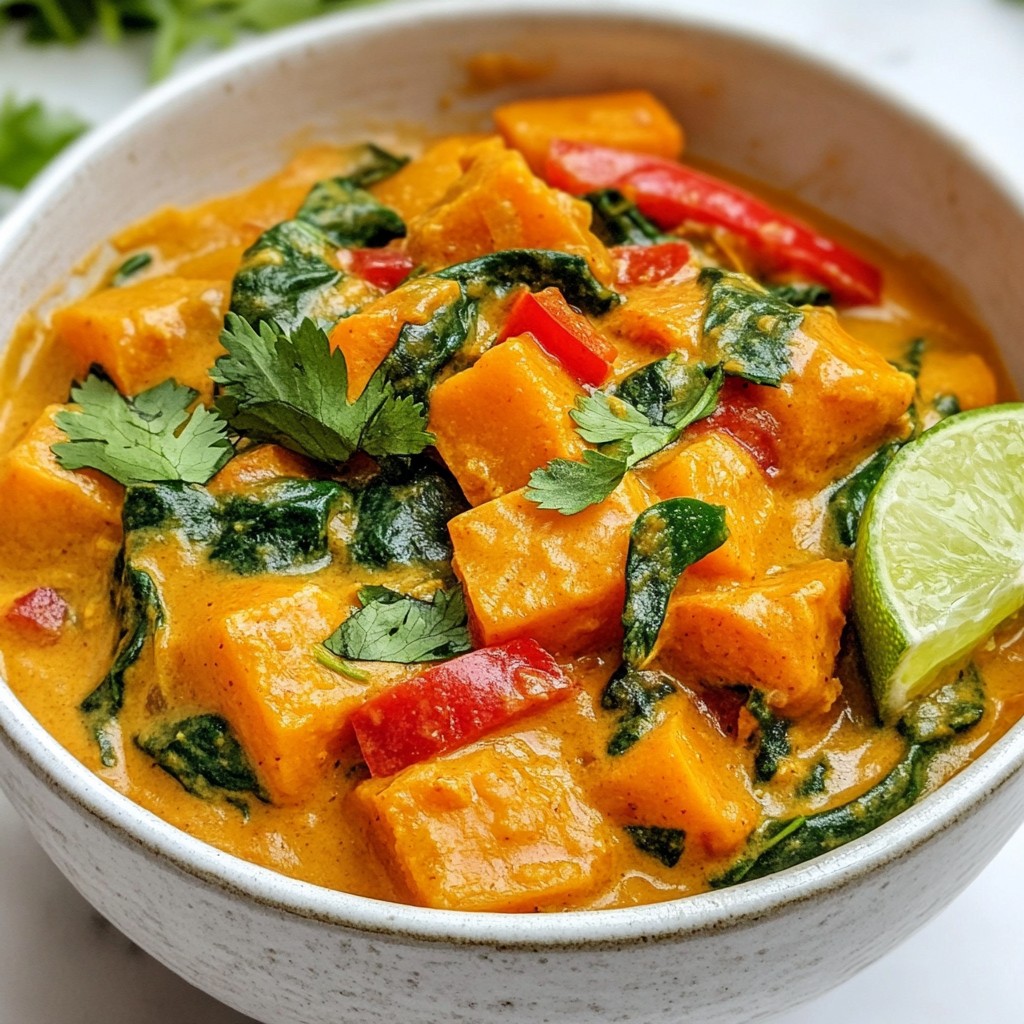
If you're craving a quick and tasty meal, look no further! Thai Peanut Sweet Potato Curry combines creamy peanut butter, fresh veggies, and tender sweet potatoes for a dish that’s both healthy and delicious. In this blog post, I’ll guide you through simple steps, ingredient tips, and creative variations. Get ready to impress your family with a meal that’s quick to make and packed with flavor!
Why I Love This Recipe
- Comforting and Creamy: This curry is the epitome of comfort food, with its rich coconut milk base and the creamy texture of peanut butter that makes every bite feel indulgent.
- Nutritious and Wholesome: Packed with sweet potatoes and spinach, this dish offers a healthy dose of vitamins and minerals, making it a guilt-free pleasure.
- Quick and Easy: With a prep time of just 10 minutes, this recipe is perfect for busy weeknights when you need a satisfying meal without spending hours in the kitchen.
- Flavorful and Versatile: The combination of red curry paste and fresh lime juice creates a vibrant flavor profile that can be paired with various sides, such as rice or quinoa.
Ingredients
List of Ingredients for Thai Peanut Sweet Potato Curry
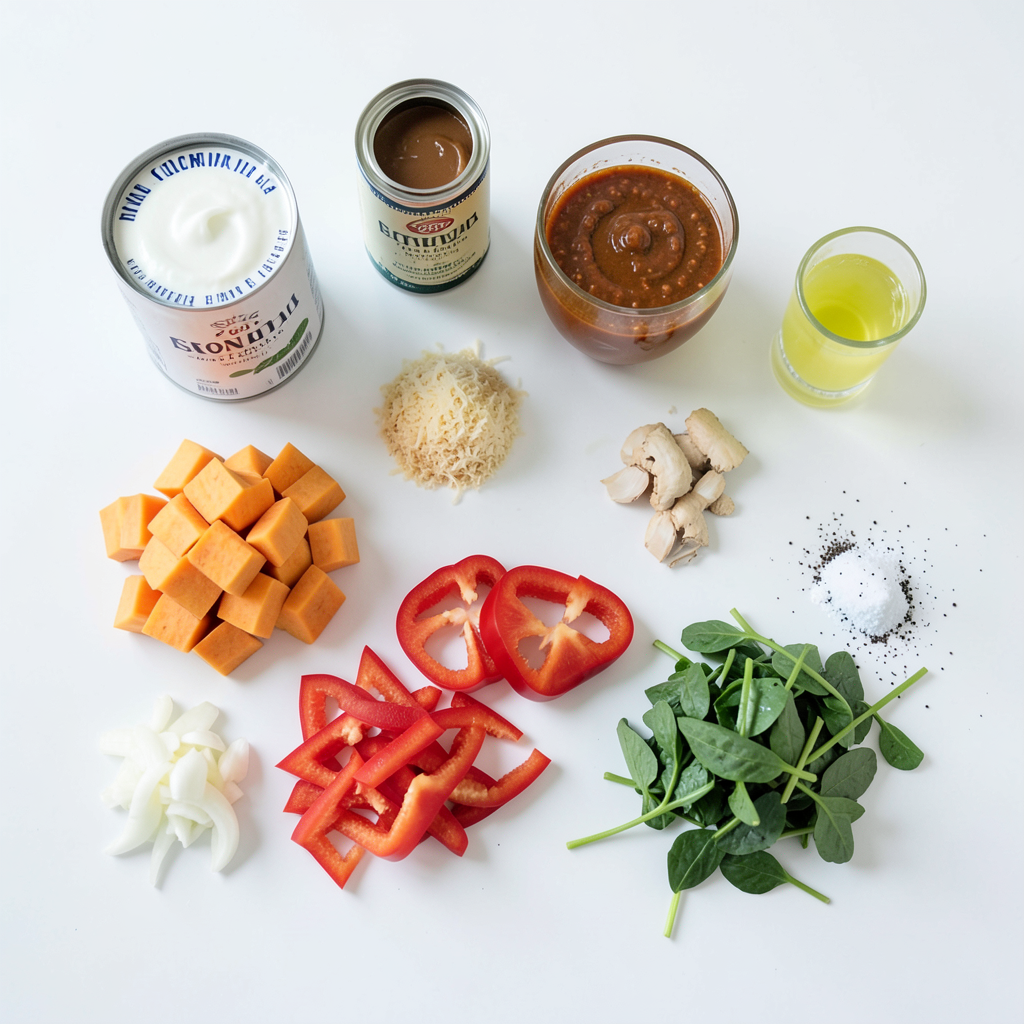
To make Thai Peanut Sweet Potato Curry, gather these ingredients:
- 2 medium sweet potatoes, peeled and cut into 1-inch cubes
- 1 can (14 oz) full-fat coconut milk
- 1 cup vegetable broth (low sodium preferred)
- 3 tablespoons peanut butter (choose smooth for creaminess or crunchy for texture)
- 1 tablespoon red curry paste (adjust for spiciness)
- 1 tablespoon soy sauce (substitute with tamari for a gluten-free option)
- 1 teaspoon fresh ginger, finely grated
- 2 cloves garlic, minced
- 1 medium red bell pepper, sliced into thin strips
- 1 cup fresh spinach, roughly chopped
- 1 tablespoon fresh lime juice
- Salt and freshly cracked black pepper, to taste
- Fresh cilantro leaves and lime wedges for garnish
Recommended Peanut Butter Types
For this recipe, I recommend using smooth peanut butter. It blends well and gives a creamy texture. If you like crunch, choose crunchy peanut butter. Both options work well and add great flavor. Look for natural peanut butter without added sugars or oils for the best taste.
Suggested Substitutions for Dietary Needs
If you're avoiding gluten, use tamari instead of soy sauce. This keeps the dish gluten-free. For those who want a nut-free option, you can use sunflower seed butter or tahini. For a lower-fat version, choose light coconut milk. Always check labels for any allergens.
Step-by-Step Instructions
Preparing the Base: Garlic and Ginger
Start by heating a small amount of oil in a large pot over medium heat. Add minced garlic and grated ginger. Sauté them for 1-2 minutes until they become fragrant and golden. Be careful not to burn them, as this will change the flavor.
Cooking the Sweet Potatoes
Next, add the diced sweet potatoes to the pot. Stir well to coat each piece with the garlic and ginger. Pour in the coconut milk and vegetable broth, mixing everything together. Raise the heat slightly and bring the mixture to a gentle simmer. Let the sweet potatoes cook uncovered for 15-20 minutes. They should be tender when pierced with a fork. Stir occasionally to prevent sticking.
Incorporating Vegetables and Seasoning
Once the sweet potatoes are cooked, add the sliced red bell pepper to the pot. Stir and cook for another 5 minutes. The peppers should be slightly tender but still bright. Lower the heat and mix in the peanut butter and soy sauce. Stir until the peanut butter melts and blends into the curry. Add the chopped spinach and drizzle lime juice over the top. Stir again, allowing the curry to simmer until the spinach wilts. Taste and season with salt and black pepper as needed.
Tips & Tricks
Best Practices for Achieving Creamy Texture
To make your Thai Peanut Sweet Potato Curry creamy, use full-fat coconut milk. It gives a rich and smooth base. A good peanut butter also helps. I recommend smooth peanut butter for a silkier texture. If you want some crunch, use crunchy peanut butter. Stir well to mix all the ingredients. This step is key to blending the flavors together.
How to Adjust Spice Level
If you like your curry mild, use less red curry paste. Start with one teaspoon, then taste it. You can add more if you want more heat. For a spicy kick, add some chili flakes or fresh chopped chili. Just remember, you can always add more spice, but you can’t take it away!
Serving Suggestions for a Complete Meal
This curry pairs well with steamed jasmine rice for a filling meal. You can also serve it with fluffy quinoa for a protein boost. For extra flavor, top your bowl with fresh cilantro and a lime wedge. This adds color and brightness to the dish. Enjoy the mix of flavors and textures while you eat!
Pro Tips
- Choose the Right Peanut Butter: Using smooth peanut butter will create a creamier texture, while crunchy peanut butter adds delightful texture and richness to the curry.
- Adjust the Spice Level: The amount of red curry paste can be adjusted according to your heat preference. Start with less and add more as needed to find your perfect balance.
- Fresh Ingredients Matter: Using fresh ginger and garlic will enhance the flavor profile of your curry significantly. Try to avoid using pre-minced varieties for the best taste.
- Serve with Complements: This curry pairs wonderfully with steamed jasmine rice or quinoa, which help to soak up the delicious sauce and make for a satisfying meal.
Variations
Vegetarian and Vegan Adaptations
You can easily make this curry vegetarian or vegan. Simply use vegetable broth and peanut butter without additives. This dish is already plant-based, so you are on the right track. You can also add more veggies like carrots or broccoli. These options keep the meal colorful and full of nutrients.
Adding Protein: Tofu or Chicken Options
For extra protein, add tofu or chicken. If you choose tofu, cut it into cubes and sauté it until golden. Add it to the curry when you mix in the peanut butter. For chicken, use diced breast meat. Cook it in the pot before the sweet potatoes. Both options will enhance the meal and keep you full.
Seasonal Vegetable Swaps
Feel free to swap in seasonal vegetables. In spring, add asparagus or snap peas. In fall, try pumpkin or butternut squash. These swaps add freshness and make the dish unique. Just remember to adjust cooking times for each vegetable. This way, you keep the curry delicious and healthy all year round.
Storage Info
Best Practices for Refrigeration
To keep your Thai Peanut Sweet Potato Curry fresh, store it in an airtight container. Let the curry cool to room temperature before sealing it. Place it in the fridge, where it can last for up to five days. If you want to keep the flavors strong, try to eat it within three days.
Freezing Instructions for Leftovers
If you have extra curry, freezing is a great option. Use a freezer-safe container or bag. Leave some space at the top because the curry will expand when freezing. It can last up to three months in the freezer. When you’re ready to eat it, thaw it overnight in the fridge.
Reheating Tips for Optimal Flavor
Reheat your curry on the stove over low heat. Stir it often to avoid burning. You can add a splash of coconut milk or broth if it seems too thick. If using a microwave, heat it in short bursts, stirring in between. This way, you keep the flavor and texture nice. Enjoy your meal again without losing any taste!
FAQs
What can I substitute for coconut milk?
If you need a substitute for coconut milk, you can use almond milk or oat milk. Both will change the flavor a bit but will still give creaminess. You can also mix soy milk with a little bit of oil for a richer taste.
Is this curry gluten-free?
Yes, this curry can be gluten-free. Just make sure to use tamari instead of soy sauce. Tamari is a great gluten-free option that keeps the flavor intact.
How can I make this recipe spicier?
To add more heat, increase the amount of red curry paste. You can also add sliced fresh chili peppers or a pinch of cayenne pepper. Start with small amounts to find the right level for you.
Can I use other vegetables in this recipe?
Absolutely! You can add vegetables like carrots, broccoli, or snap peas. Just cut them into small pieces and add them when you add the red bell pepper. They will cook nicely and blend with the flavors.
How long does Thai Peanut Sweet Potato Curry last in the fridge?
This curry lasts about 3 to 5 days in the fridge. Store it in an airtight container. When you're ready to eat, just reheat it on the stove or in the microwave. Enjoy every bite!
This Thai Peanut Sweet Potato Curry combines tasty ingredients for a flavorful meal. You learned about everything from choosing the right peanut butter to storing leftovers. Remember, feel free to adjust the spice and swap in your favorite veggies. This dish works for many diets and is easy to customize.
Now, it's time to enjoy your cooking adventures and make this dish your own!