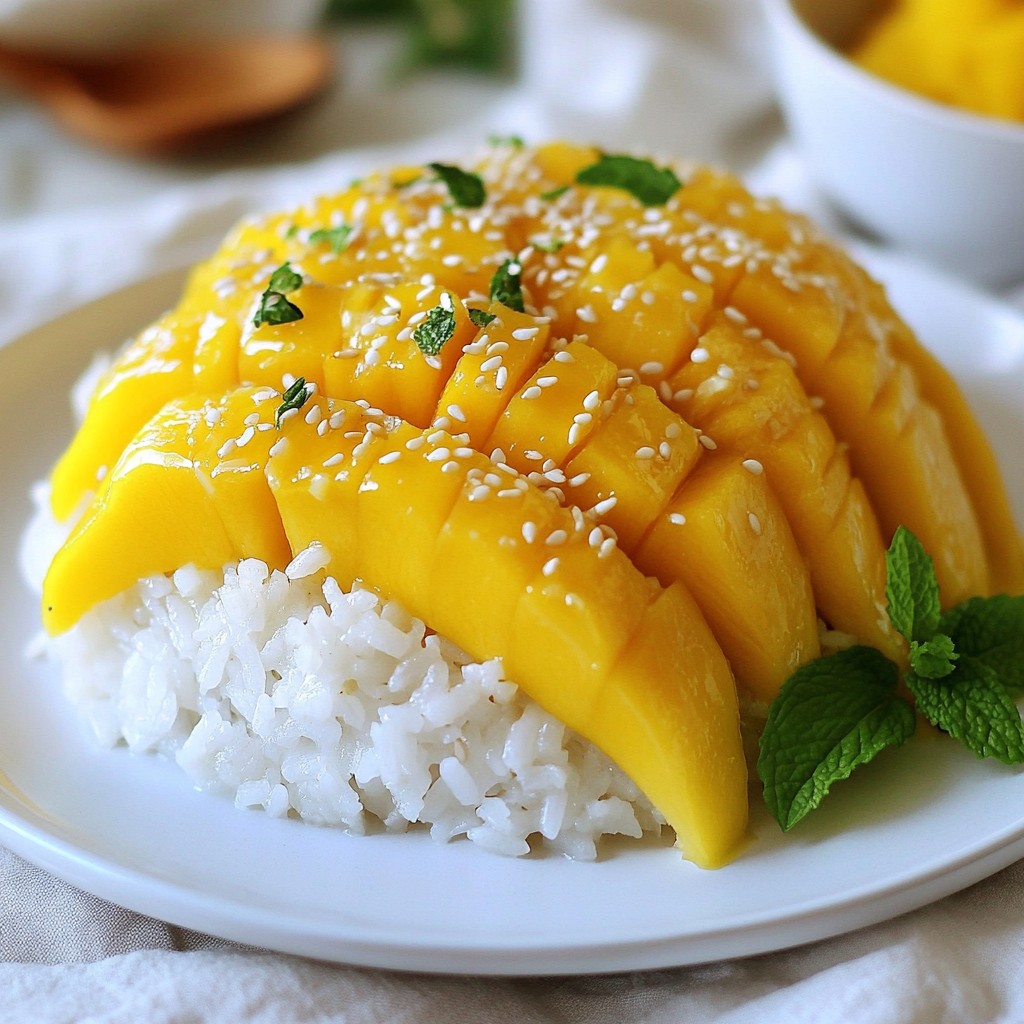
Are you ready to dive into a creamy and comforting dessert that brings Thailand to your kitchen? Thai Mango Sticky Rice is a sweet, satisfying treat that combines the perfect blend of sticky rice, fresh mango, and rich coconut sauce. In this post, I’ll guide you through each step to create this beloved dish. Let’s discover the key ingredients, useful tips, and variations to make it your own!
Why I Love This Recipe
- Authentic Flavors: This Thai Mango Sticky Rice beautifully combines the sweetness of ripe mangoes with the rich creaminess of coconut milk, delivering an authentic taste of Thailand.
- Simple Ingredients: With just a handful of ingredients, this dessert is both easy to make and accessible, making it a great choice for any home cook.
- Versatile Presentation: The dish can be elegantly plated or served casually, making it perfect for both special occasions and everyday treats.
- Customizable Toppings: You can easily adjust the recipe by adding different toppings such as sesame seeds or fresh mint, allowing for personal flair and creativity.
Ingredients
Key Ingredients for Thai Mango Sticky Rice
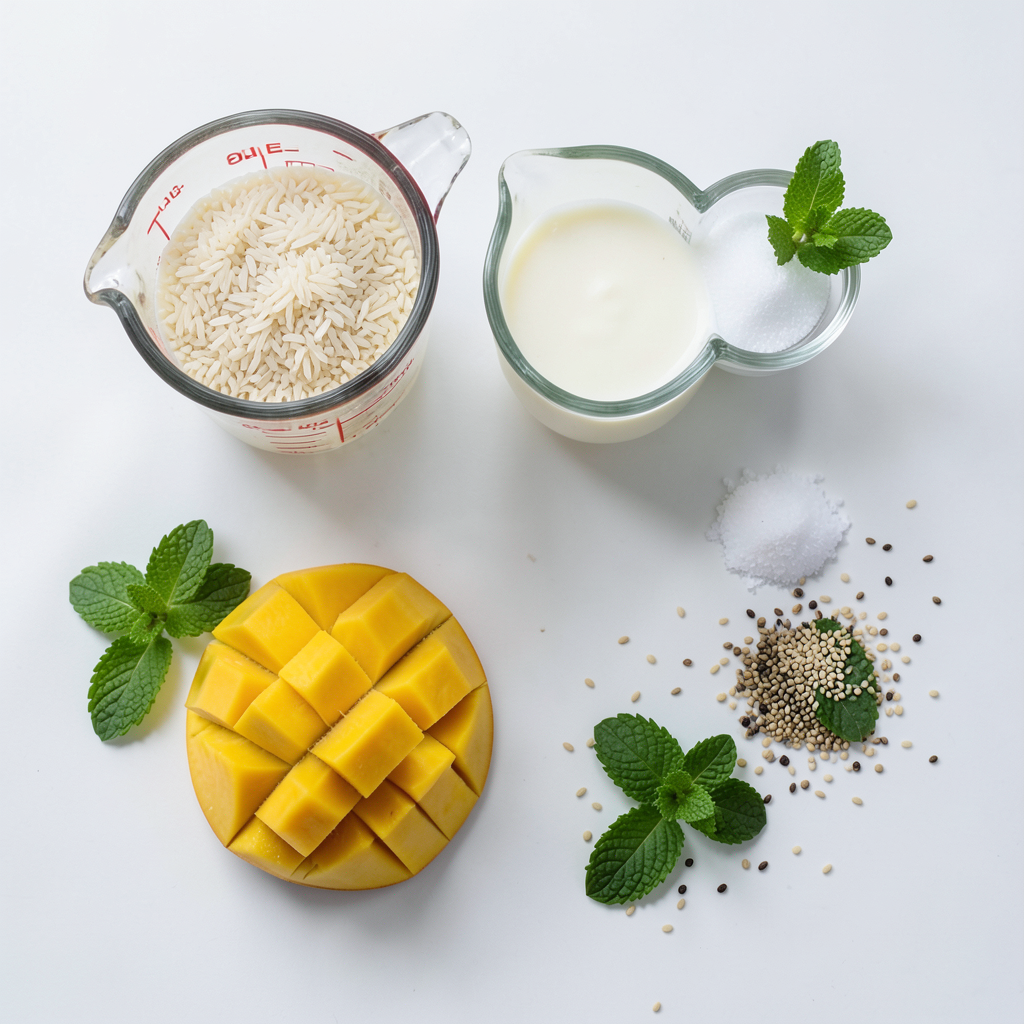
For this tasty treat, you will need the following key ingredients:
- 1 cup sticky rice (glutinous rice)
- 1 ½ cups coconut milk
- ½ cup granulated sugar
- ¼ teaspoon salt
- 2 ripe mangoes, peeled and sliced into thin wedges
Sticky rice is the star here. It gives that unique chewy texture. Coconut milk adds rich creaminess. The sugar balances the flavors just right. The salt enhances everything, making each bite pop. Fresh mango adds a sweet and juicy touch.
Optional Garnishes
You can make your dish even prettier with these optional garnishes:
- 2 tablespoons sesame seeds
- Fresh mint leaves
Sesame seeds add a nice crunch. Mint leaves bring freshness and color. They make your dessert look stunning and taste even better.
Ingredient Substitutions
If you can’t find some ingredients, here are a few easy swaps:
- If you can't find sticky rice, try jasmine rice. It won't be the same, but it can work in a pinch.
- You can use light coconut milk for a lower-fat option, but it will be less creamy.
- If you want a different sweetener, maple syrup or honey can replace granulated sugar.
With these ingredients, you’re ready to make a delicious Thai Mango Sticky Rice. Enjoy creating this comforting dessert!
Step-by-Step Instructions
Rinsing and Soaking the Sticky Rice
Start by rinsing your sticky rice under cold water. You want to wash it until the water runs clear. This step removes excess starch. After rinsing, soak the rice in water for at least 4 hours. For the best texture, soak it overnight. This helps the rice absorb water and become soft.
Steaming the Rice
Once the rice has soaked, drain it well. Now, it's time to steam the rice. You can use a bamboo steamer or a heatproof dish. Place it over a pot of simmering water. Steam the rice for 25 to 30 minutes. You want it tender and sticky. Check it halfway through to make sure it cooks evenly.
Preparing the Coconut Sauce
While the rice steams, prepare the coconut sauce. In a medium saucepan, mix the coconut milk, granulated sugar, and salt. Heat it over medium heat. Stir gently until the sugar dissolves. Do not let it boil. Set aside about half a cup of this sauce for later. This sauce adds a creamy taste to the dish.
Combining Rice with Coconut Mixture
When the rice is done, transfer it to a large bowl. Pour the remaining coconut sauce over the hot rice. Stir gently to coat each grain. Let the rice sit for about 30 minutes. This allows the rice to soak up the coconut flavor.
Plating and Serving Suggestions
To serve, mold a portion of sticky rice. You can use a small bowl or shape it with your hands. Place the rice on a plate. Slice the mangoes and fan them out next to the rice. Drizzle the reserved coconut sauce over both the rice and mango slices. For a nice touch, sprinkle sesame seeds on top. Add fresh mint leaves for color and flavor. Enjoy this creamy and comforting dessert!
Tips & Tricks
Ensuring Perfect Rice Texture
To get the best texture, rinse the sticky rice well. Use cold water and rinse until it runs clear. This step removes extra starch and keeps the rice from being gummy. Soaking is just as important. Soak the rice for at least 4 hours, or overnight if you have time. This helps the rice grains absorb water and cook evenly.
When steaming, use a bamboo steamer or a heatproof dish over simmering water. Steam the rice for 25 to 30 minutes. You want it to be tender and sticky. Keep an eye on it to avoid overcooking.
Flavor Enhancements
The coconut sauce makes this dish shine. Use fresh coconut milk for the best taste. If you can, avoid canned coconut milk, as it may lack flavor. Add just the right amount of sugar—too much can overpower the dish. A pinch of salt balances the sweetness perfectly.
You can also experiment with flavors! Try adding a bit of pandan leaf while cooking the rice for a fresh aroma. For an extra kick, mix in a dash of vanilla extract in the coconut sauce.
Common Mistakes to Avoid
One common mistake is not rinsing the rice enough. If you skip this step, the rice can turn out too sticky. Another mistake is not soaking the rice long enough. This can lead to uneven cooking.
Be careful with the coconut sauce. Avoid boiling it; just heat until the sugar dissolves. Boiling can change the flavor and texture. Lastly, when plating, don’t rush! Take time to mold the rice nicely and arrange the mango slices. This makes your dish look great and taste even better!
Pro Tips
- Soak the Rice for Best Results: Soaking the sticky rice overnight not only improves its texture but also ensures that it cooks evenly, resulting in a perfect sticky consistency.
- Control the Coconut Sauce Consistency: If you prefer a thicker coconut sauce, allow it to simmer a bit longer to reduce. Just be sure to keep it from boiling to maintain its creamy texture.
- Use Ripe Mangoes: The sweetness and texture of the mangoes can greatly enhance your dish. Choose ripe, fragrant mangoes for the best flavor pairing with the sticky rice.
- Garnishing for Presentation: Adding sesame seeds and fresh mint not only elevates the dish visually but also adds a delightful contrast in flavor and texture with every bite.
Variations
Different Fruits to Pair with Sticky Rice
You can enjoy sticky rice with many fruits. While mango is the classic choice, other fruits shine too. Try ripe bananas for a sweet twist. Pineapple adds a tangy bite that brightens the dish. Fresh strawberries offer a burst of color and flavor. You can experiment with your favorites. Each fruit brings its own charm to the dessert.
Vegan and Dairy-Free Adjustments
If you want a vegan version, it’s easy! Just use coconut milk for the sauce. This recipe is already dairy-free, which makes it great for everyone. You can swap sugar with maple syrup or agave nectar. This keeps the sweetness while staying plant-based. Always check labels to ensure your sugar is vegan.
Flavoring the Coconut Sauce
To enhance the coconut sauce, consider adding flavors. A bit of vanilla extract works wonders. It adds depth without overpowering the dish. You can also infuse pandan leaves for a unique taste. Simply simmer the leaves with the coconut milk. This gives a fragrant aroma and color. For a spicy kick, add a pinch of salt or cinnamon. Flavor adjustments can make your dish even more special.
Storage Info
How to Store Leftovers
To store leftovers of Thai mango sticky rice, place it in an airtight container. Make sure to let the rice cool to room temperature first. This helps keep it fresh. Store it in the fridge for up to three days. The mango should be kept separate to avoid becoming mushy.
Reheating Instructions
When you're ready to enjoy leftovers, gently reheat the sticky rice. You can use a microwave or steam it. If using a microwave, cover the rice with a damp paper towel. This keeps it moist. Heat it at medium power for one to two minutes. If using a steamer, add a splash of coconut milk to keep it creamy.
Freezing Tips
To freeze Thai mango sticky rice, put it in a freezer-safe container. Ensure it is sealed tightly to prevent freezer burn. You can freeze it for up to a month. Keep in mind that the mango slices do not freeze well. For best results, add fresh mango after thawing and reheating the rice.
FAQs
How do you make authentic Thai Mango Sticky Rice?
To make authentic Thai Mango Sticky Rice, you need sticky rice, coconut milk, sugar, and ripe mangoes. Start by rinsing the sticky rice in cold water until the water is clear. Soak it for at least four hours, or overnight for the best texture. Next, steam the rice for 25-30 minutes until it's tender and sticky. While the rice cooks, combine coconut milk, sugar, and salt in a pan. Heat gently until the sugar dissolves. Pour most of this sauce over the cooked rice and let it sit for 30 minutes. Finally, serve with mango slices and drizzle with the reserved sauce.
Can I use regular rice instead of sticky rice?
No, you cannot use regular rice instead of sticky rice. Sticky rice, or glutinous rice, has a unique texture that makes it chewy and holds together well. Regular rice will not give you the same creamy and sticky result. If you want authentic taste and texture, stick with sticky rice.
Where can I find the best Mango Sticky Rice in Thailand?
You can find the best Mango Sticky Rice in Thailand at street food stalls and local markets. Look for vendors that serve fresh mangoes and sticky rice. Popular areas include Bangkok, Chiang Mai, and the islands. Try to visit places that locals recommend for the most authentic experience.
Is Thai Mango Sticky Rice served warm or cold?
Thai Mango Sticky Rice is usually served warm. The sticky rice is best when it's fresh and warm, topped with cold, ripe mango slices. This contrast in temperature enhances the dish's flavor and texture. However, you can enjoy it cold if you prefer!
Thai mango sticky rice is a delightful treat made from simple ingredients. We explored key ingredients, garnishes, and substitution ideas. The step-by-step guide helps you cook perfect sticky rice and a creamy coconut sauce. We shared tips to enhance flavor and texture, plus common mistakes to avoid. Variations with different fruits and dietary adjustments offer fun twists. Finally, storing and reheating tips ensure you enjoy this delicious dish later. Embrace the joy of making this classic dessert at home and share it with friends and family.