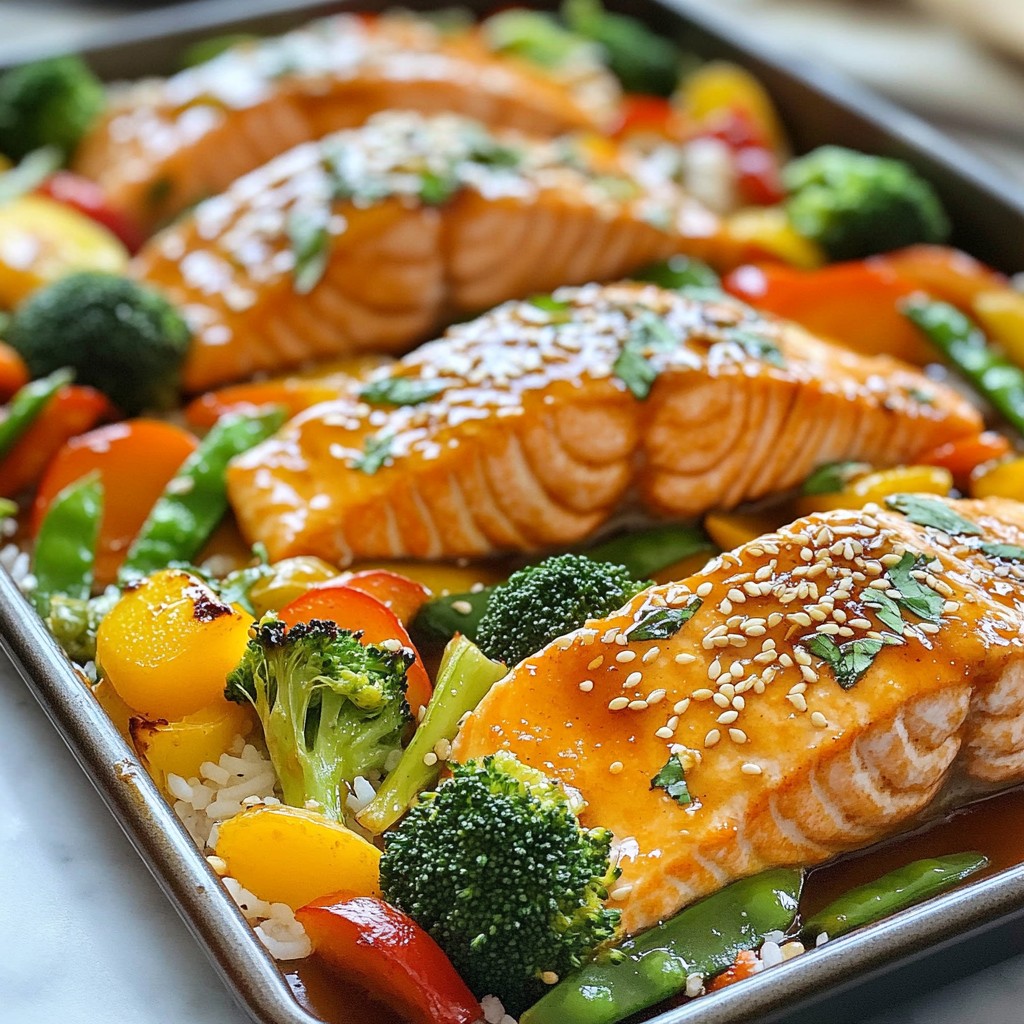
Looking for a quick and tasty dinner idea? You’ve found it! This Teriyaki Salmon Sheet Pan Dinner is easy to make and packed with flavor. With just a few ingredients and simple steps, you can serve a delicious meal in no time. Let’s dive into the world of teriyaki salmon and discover how to create a satisfying dish that everyone will love!
Why I Love This Recipe
- Deliciously Balanced: This dish combines savory salmon with a medley of vibrant vegetables, creating a satisfying meal that is both tasty and nutritious.
- Quick and Easy: With a total time of just 25 minutes, this sheet pan dinner is perfect for busy weeknights when you want a home-cooked meal without the hassle.
- One Pan Wonder: Minimal cleanup is required since everything cooks together on one sheet pan, making it an ideal choice for effortless cooking and easy serving.
- Customizable Ingredients: You can easily swap out the vegetables or proteins based on your preferences or what you have on hand, allowing for endless variations.
Ingredients
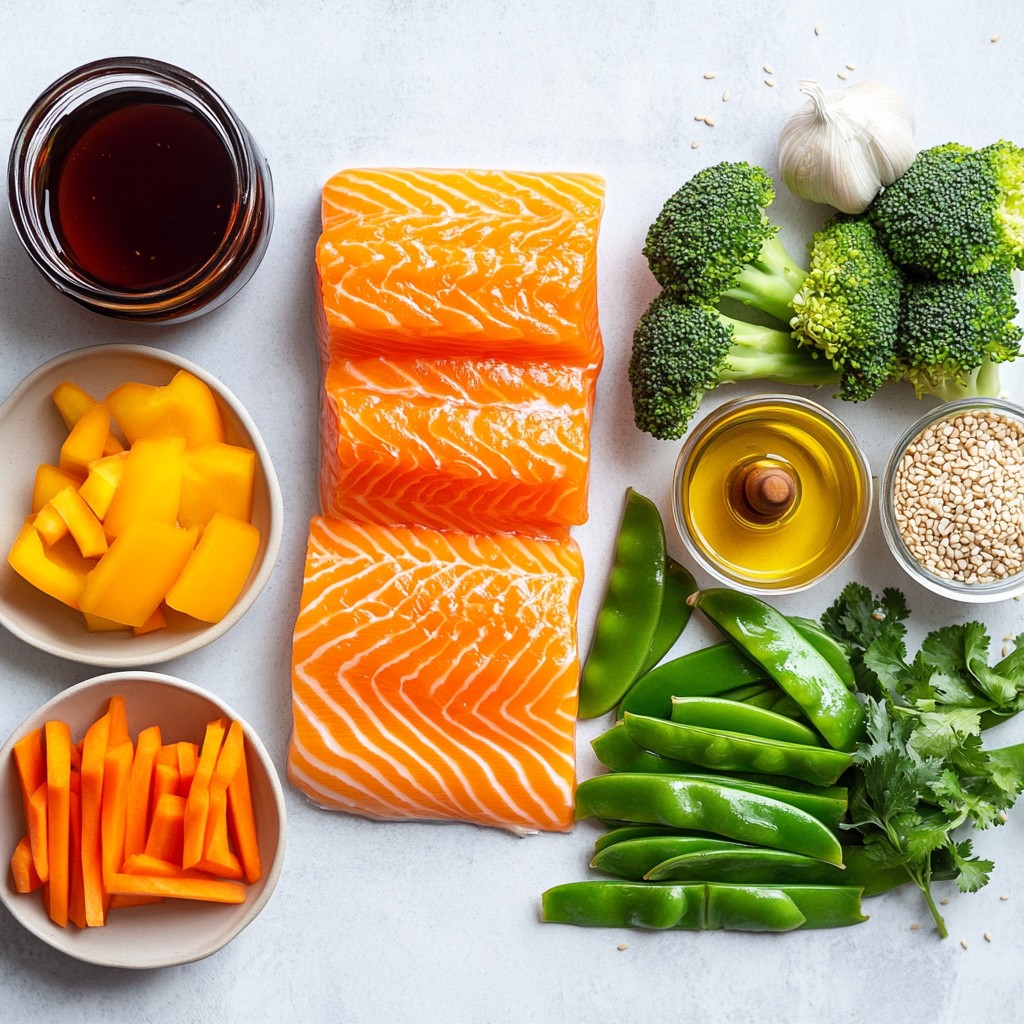
Main Ingredients for Teriyaki Salmon
- 4 salmon fillets (approximately 6 oz each)
- 2 cups broccoli florets
- 1 bell pepper, sliced (choose any vibrant color)
- 1 cup snap peas
- 1 cup carrots, sliced into thin rounds
Teriyaki Sauce Components
- 1/4 cup low-sodium soy sauce
- 2 tablespoons honey or maple syrup (for sweetness)
- 1 tablespoon sesame oil
- 1 tablespoon rice vinegar
- 1 tablespoon freshly grated ginger
- 2 cloves garlic, minced finely
- Freshly ground salt and pepper to taste
Serving Suggestions
- Cooked jasmine rice (for serving alongside)
- 1 tablespoon sesame seeds (for garnish)
- Optional: finely chopped green onions for added freshness
Step-by-Step Instructions
Preparation Steps
1. Preheat your oven to 400°F (200°C). This temperature helps the salmon cook evenly and the veggies get tender.
2. Prepare a large sheet pan by lining it with parchment paper. This makes for easy cleanup and keeps food from sticking.
3. In a mixing bowl, whisk together the following ingredients for your teriyaki sauce:
- 1/4 cup low-sodium soy sauce
- 2 tablespoons honey or maple syrup
- 1 tablespoon sesame oil
- 1 tablespoon rice vinegar
- 1 tablespoon freshly grated ginger
- 2 cloves garlic, minced finely
Mix until smooth and well blended.
Arranging the Salmon and Vegetables
1. Arrange the salmon fillets on one side of the prepared sheet pan. Each fillet should be about 6 ounces.
2. Season each fillet with a sprinkle of freshly ground salt and pepper.
3. Use a brush to coat the tops of the salmon with the teriyaki sauce. Make sure it covers well for great flavor.
4. In a separate bowl, combine your vegetables:
- 2 cups broccoli florets
- 1 bell pepper, sliced
- 1 cup snap peas
- 1 cup carrots, sliced into thin rounds
5. Drizzle the remaining teriyaki sauce over the vegetables. Toss gently until they are evenly coated.
6. Spread the seasoned vegetables in a single layer on the empty side of the sheet pan. This helps them roast evenly.
Baking and Serving
1. Place the sheet pan in the preheated oven. Bake for 12-15 minutes.
2. Check for doneness. The salmon should flake easily with a fork. The vegetables should be tender but still bright in color.
3. Remove the pan from the oven. Sprinkle sesame seeds on top for an added crunch.
4. To serve, place the teriyaki salmon and roasted vegetables over cooked jasmine rice. For extra flavor, drizzle any remaining pan sauce over the whole dish.
Enjoy your delicious and colorful meal!
Tips & Tricks
Cooking Techniques
To get the best flavor when baking, preheat your oven to 400°F (200°C). This high heat cooks the salmon and veggies just right. Line your sheet pan with parchment paper. It helps keep things from sticking and makes cleanup easy.
For even cooking, arrange the salmon and vegetables in a single layer. Don't crowd them. Space allows hot air to flow evenly. This way, the salmon cooks well, and the vegetables stay crisp and colorful.
Marinating Suggestions
Marinating the salmon makes it taste great. Use a mix of soy sauce, honey, sesame oil, rice vinegar, ginger, and garlic. Make sure to coat the salmon well. Let it marinate for at least 15 minutes. If you have more time, 30 minutes is even better. Just don’t go over 1 hour, or the fish can get too salty.
Presentation Tips
For serving, you can choose family-style or plated servings. Family-style means serving directly from the sheet pan. It’s fun and easy for everyone. For plated servings, arrange the salmon, veggies, and rice nicely on each plate.
To enhance the dish’s look, add garnishes like sesame seeds or chopped green onions. They give a nice pop of color and flavor. Enjoy your meal!
Pro Tips
- Fresh Ingredients: Use the freshest salmon and vegetables available to enhance the flavor and texture of your dish.
- Marinate for Flavor: If time allows, marinate the salmon in the teriyaki mixture for 30 minutes to an hour before cooking for a deeper flavor.
- Even Cooking: Cut vegetables into similar sizes to ensure they cook evenly and maintain a consistent texture.
- Adjust Sweetness: Feel free to adjust the amount of honey or maple syrup in the sauce to suit your taste preference for sweetness.
Variations
Vegetable Alternatives
You can swap out the veggies in this dish. If you want, try:
- Zucchini, sliced
- Asparagus, cut into pieces
- Cauliflower, broken into florets
These choices add variety and flavor. You can also use seasonal veggies. For spring, use fresh peas or radishes. In fall, try butternut squash or Brussels sprouts.
Flavor Profile Modifications
Changing the flavors is easy! Instead of honey, you can use:
- Agave syrup
- Brown sugar
- Coconut sugar
Each sweetener brings a unique taste. If you like spice, add:
- Red pepper flakes
- Sriracha
- Fresh chili peppers
These additions make the dish more exciting!
Protein Alternatives
If you want a change from salmon, try chicken or tofu. For chicken, use:
- 4 chicken breasts, about 6 oz each
Adjust the cooking time to about 20-25 minutes. For tofu, use firm tofu, cut into cubes. Bake for 15-20 minutes. This way, everyone can enjoy this tasty meal!
Storage Info
Leftovers Storage
After your meal, store any leftover salmon and vegetables in the fridge. Use airtight containers to keep them fresh. Salmon can last up to three days when stored properly. For the best taste, eat the leftovers within this time frame. Keep the vegetables and salmon together or separate, depending on your preference.
Reheating Instructions
To reheat your meal without drying it out, use a low heat setting. The oven works great for reheating salmon. Set it to 300°F (150°C) and warm for about 10 minutes. If you prefer the microwave, cover the dish with a damp paper towel. This keeps the moisture in and prevents the salmon from getting tough. Heat for about 1-2 minutes, checking often.
Meal Prep Options
You can make this recipe ahead of time for quick meals. Prepare the salmon and veggies, then store them in the fridge. Cook them fresh when ready to eat. For longer storage, freeze the uncooked salmon and veggies. Place them in freezer bags, removing as much air as possible. They can last up to three months. When you're ready, thaw in the fridge overnight before cooking.
FAQs
How long to cook teriyaki salmon?
Cook teriyaki salmon for 12-15 minutes at 400°F (200°C). This time allows the salmon to cook through and become flaky. Check for doneness by gently flaking the salmon with a fork. The fish should be opaque and easily break apart.
Can I make teriyaki sauce from scratch?
Yes, you can make teriyaki sauce at home. Here’s a simple recipe:
- 1/4 cup low-sodium soy sauce
- 2 tablespoons honey or maple syrup
- 1 tablespoon sesame oil
- 1 tablespoon rice vinegar
- 1 tablespoon grated ginger
- 2 cloves minced garlic
Mix these ingredients in a bowl until well combined. This sauce adds great flavor to your salmon and veggies.
What can I serve with teriyaki salmon?
While jasmine rice is a classic choice, you can serve teriyaki salmon with:
- Quinoa for a nutty flavor
- Cauliflower rice for a low-carb option
- Steamed or roasted sweet potatoes for extra sweetness
- A fresh salad for crunch and color
These sides complement the flavors of the salmon and sauce.
Is teriyaki sauce gluten-free?
Traditional teriyaki sauce contains soy sauce, which often has gluten. However, you can find gluten-free soy sauce or tamari. Always check labels for gluten-free options. This way, you can enjoy teriyaki salmon without any gluten worries.
You’ve learned how to make teriyaki salmon that dazzles. We covered main ingredients, sauces, and serving ideas. You now know how to prepare, arrange, and bake salmon and veggies perfectly. The tips on marinating and presentation will make your dish shine. Remember, you can customize flavors and veggies to fit your taste. Store and reheat leftovers wisely to keep them fresh. Enjoy your cooking, and make each meal a delicious event!