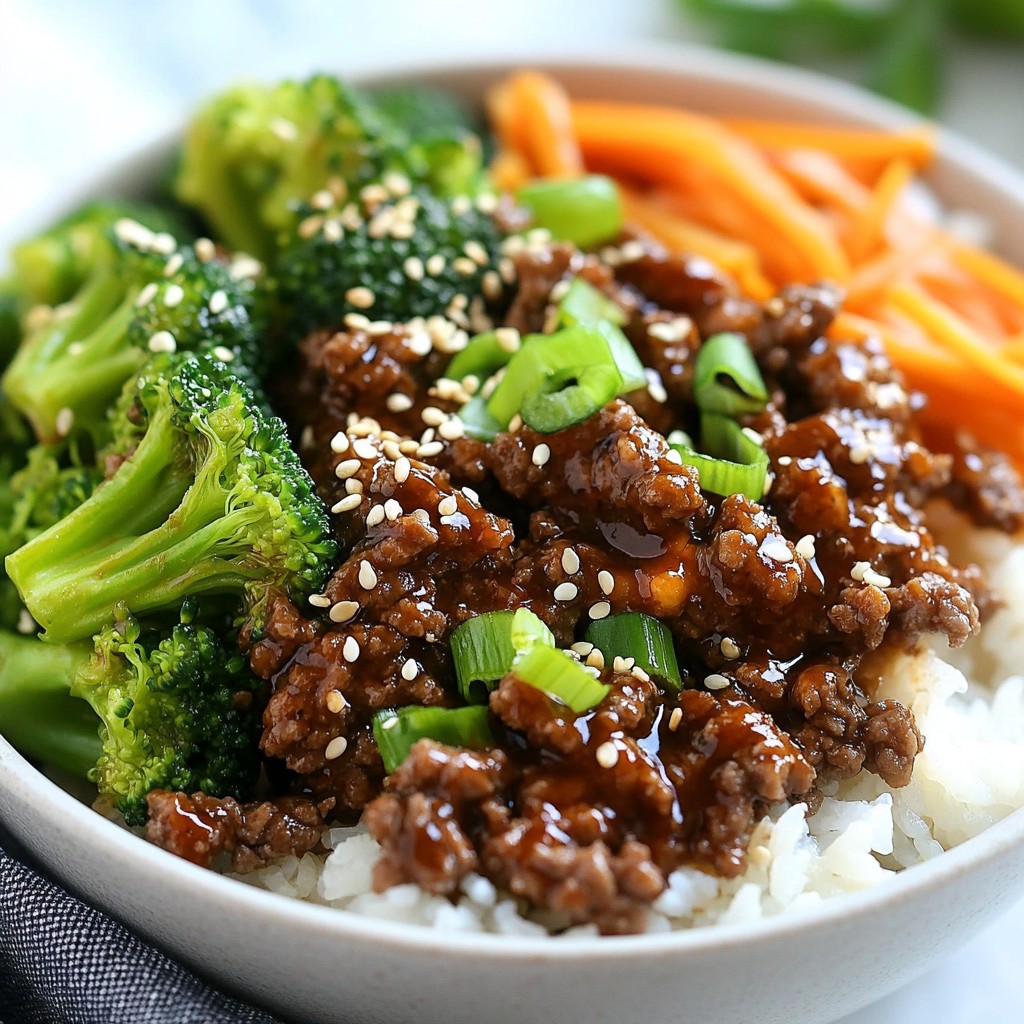
Are you craving a bold and delicious meal that’s easy to make? Look no further! This Spicy Korean Beef Bowl recipe packs a punch with rich flavors and fresh ingredients. Perfect for busy weeknights, you'll find everything you need right at home. Follow along as I guide you through simple steps to create a tasty dish that’s sure to impress your family and friends. Let’s spice things up in the kitchen!
Why I Love This Recipe
- Bold Flavors: This recipe combines the rich umami of soy sauce with the spicy kick of gochujang, creating a deliciously bold flavor profile that tantalizes the taste buds.
- Quick and Easy: With a total preparation time of just 25 minutes, this dish is perfect for busy weeknights when you want something homemade without spending hours in the kitchen.
- Customizable: You can easily adapt this recipe to include your favorite vegetables or adjust the spice level to suit your preferences, making it versatile for any palate.
- Healthy Ingredients: Packed with vegetables like broccoli and carrots, along with lean protein, this bowl is not only delicious but also a nutritious meal option for any occasion.
Ingredients
Main Ingredients
- 1 lb ground beef or thinly sliced beef
- 2 tablespoons gochujang (Korean chili paste)
- 1 cup broccoli florets
Additional Ingredients
- 3 tablespoons soy sauce
- 1 tablespoon sesame oil
- 1 cup cooked rice (white or brown)
Garnishes
- 1 teaspoon minced garlic
- 1 medium carrot, julienned
- 2 green onions, sliced thinly
- 1 tablespoon sesame seeds
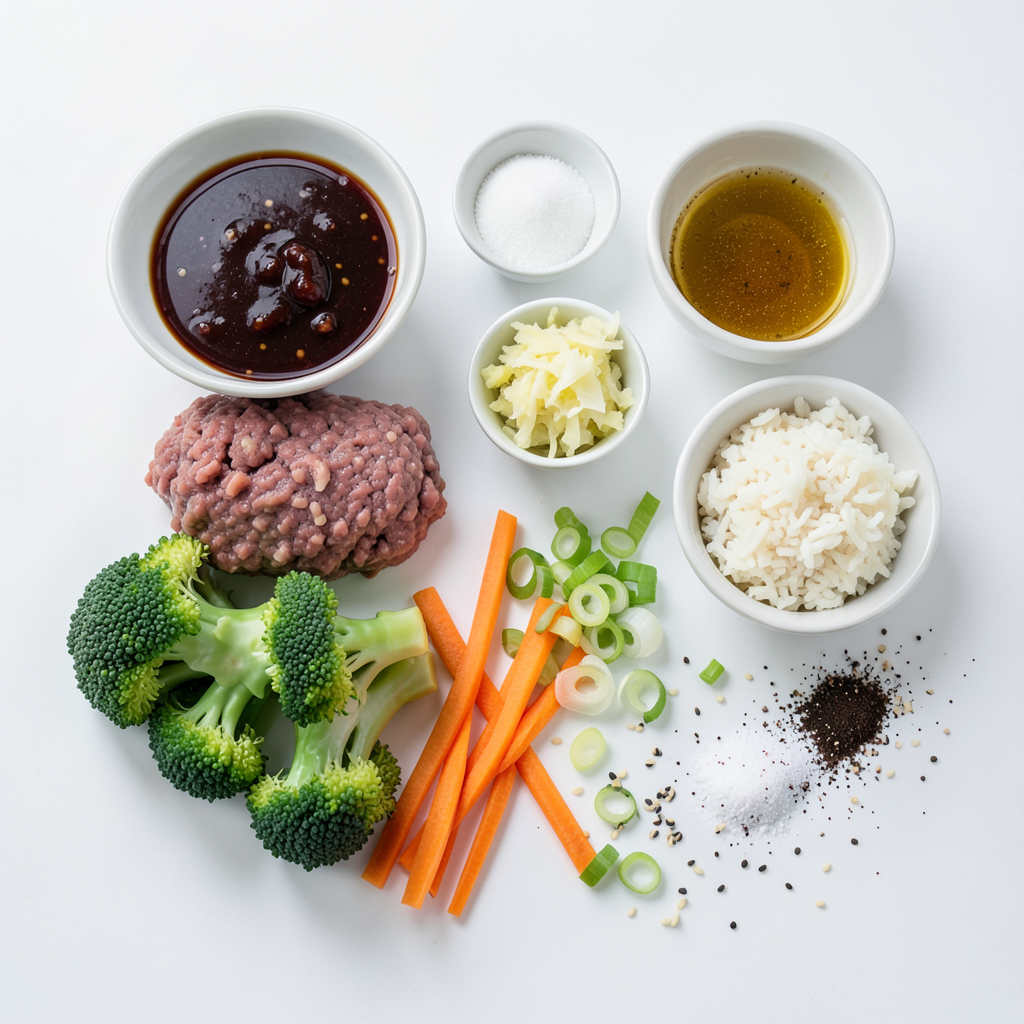
To make Spicy Korean Beef Bowls, gather your ingredients first. Start with the main items, like beef and gochujang. The gochujang gives this dish its signature heat and flavor. Broccoli adds color and crunch.
Next, look for soy sauce and sesame oil. These add a rich taste to the beef. Don't forget your cooked rice, as it serves as the base for your bowl. You can use white or brown rice, depending on your taste.
For garnishes, have minced garlic and julienned carrots ready. Green onions and sesame seeds add a fresh touch. These small details make your dish look great and taste even better.
With these ingredients, you are set to create a delicious meal that is both spicy and savory. Enjoy the process of cooking!
Step-by-Step Instructions
Preparation of Ingredients
Cooking the beef Start by heating sesame oil in a large pan over medium heat. Add minced garlic and grated ginger. Stir for about 30 seconds until fragrant. Then, add the ground beef or thinly sliced beef. Cook it until fully browned, breaking it up if using ground beef. Drain excess fat if needed.
Blanching broccoli While the beef cooks, fill a pot with water and bring it to a boil. Add the broccoli florets for about two minutes. This quick cooking method keeps the bright green color. Immediately transfer the broccoli to a bowl of ice water to stop cooking. Drain the broccoli and set it aside.
Combining Flavors
Mixing sauce ingredients with beef Once the beef is cooked, it’s time to add flavor. Stir in soy sauce, gochujang, and sugar. Mix well to coat the beef evenly. Let this simmer for about five minutes so the flavors blend.
Adding vegetables Now, add the blanched broccoli and julienned carrot to the beef mixture. Gently stir to combine all ingredients. This adds color and crunch to your dish.
Assembly of the Bowl
Layering the rice and beef In serving bowls, start with a layer of cooked rice. Next, spoon the spicy beef mixture over the rice. This creates a warm, savory base.
Adding garnishes Finish by adding garnishes. Sprinkle sliced green onions and sesame seeds on top. Add salt and pepper to taste. This adds a nice touch of flavor and texture!
Tips & Tricks
Cooking Tips
To prevent overcooking beef, keep a close eye on the heat. Cook ground beef until it is just brown. For sliced beef, cook it quickly over high heat. This keeps the meat tender and juicy.
When blanching vegetables, like broccoli, start with boiling water. Add the broccoli for about two minutes. Then, quickly transfer it to ice water. This stops the cooking and keeps the color bright.
Serving Suggestions
For ideal accompaniments, serve your spicy Korean beef bowls with pickled vegetables. Kimchi adds a nice crunch and extra flavor. You might also include a side of steamed rice or a simple salad.
To create a balanced meal, aim for a mix of protein, carbs, and veggies. The beef gives you protein, while rice provides carbs. Broccoli and carrots add important vitamins and minerals.
Enhancing Flavor
If you want to adjust the spice level, add more gochujang. Start with a small amount, taste, and add more if needed. You can also add a pinch of red pepper flakes for extra heat.
Using fresh herbs can enhance the flavor too. Cilantro or basil can brighten the dish. Add them as a garnish for a fresh finish.
Pro Tips
- Choose Quality Beef: Opt for grass-fed or organic ground beef for a richer flavor and better texture.
- Adjust Spice Levels: If you prefer a milder dish, reduce the amount of gochujang or add more sugar to balance the heat.
- Vegetable Variations: Feel free to add other vegetables like bell peppers or snap peas for extra color and nutrients.
- Meal Prep Friendly: Make a larger batch and store leftovers in the fridge for a quick reheatable meal during the week.
Variations
Protein Alternatives
You can switch the ground beef for chicken. Just use chicken thighs or breast. Cook them the same way you do the beef.
Tofu is a great option too. Use firm or extra-firm tofu for the best texture. Press it to remove moisture, then cube it and sauté until golden.
If you want a vegetarian dish, try using mushrooms. Shiitake or portobello mushrooms work well. They add rich flavor and texture.
Rice Substitutes
If you want to change the rice, try quinoa. It cooks quickly and adds a nutty flavor.
Cauliflower rice is another option. It is low in carbs and adds a nice crunch. Just sauté it lightly to keep it crisp.
You can also serve the dish with noodles. Rice noodles or soba noodles are great choices. They soak up the sauce well and make a filling meal.
Flavor Enhancements
Adding kimchi can boost the flavor. It adds spice and tang. You can mix it in or serve it on the side.
Pickled vegetables are another tasty addition. They give a nice crunch and a bit of sweetness.
For sauces, try a drizzle of sriracha or a splash of sesame sauce. Both add extra heat and depth to your bowl.
Storage Info
Refrigeration
To store leftovers, place your Spicy Korean Beef Bowls in an airtight container. Make sure to cool the dish to room temperature before sealing it. This keeps the flavors fresh and helps prevent bacteria growth. For best results, eat leftovers within three days.
When reheating, use a microwave or stovetop. If using a microwave, cover the bowl to retain moisture. Heat in short bursts, stirring between to ensure even warming. On the stovetop, gently reheat over medium heat, stirring often. Avoid overcooking, as this can dry out the beef.
Freezing
Yes, you can freeze Spicy Korean Beef Bowls. However, it's best to freeze the beef and rice separately from the vegetables. This prevents the vegetables from becoming mushy. Use freezer-safe containers or bags to store each component.
For tips on freezing, cool everything completely before packing. Label your containers with the date. When it's time to eat, thaw the beef and rice overnight in the fridge. Reheat on the stovetop until hot. You can quickly sauté the vegetables in a pan to restore their crispness.
Shelf Life
You can keep the dish in the fridge for up to three days. If frozen, the bowls can last for about three months. Always check for signs of spoilage before eating leftovers. Look for off smells, changes in color, or a slimy texture. If you notice any of these signs, it’s best to discard the dish.
FAQs
What is gochujang and where can I find it?
Gochujang is a Korean chili paste. It adds heat and depth to dishes. You can find it in Asian grocery stores or online. Look for it in the sauce aisle. It often comes in a red tub.
How spicy are Spicy Korean Beef Bowls?
Spicy Korean Beef Bowls have a nice kick. The level of heat depends on the gochujang. If you love heat, use more gochujang. If you prefer mild, use less. You can always adjust it to your taste.
Can I make this dish ahead of time?
Yes, you can make this dish ahead. Cook the beef and veggies, then store them in the fridge. Reheat them when ready to serve. Cooked rice can also be made ahead. Just store it in an airtight container.
What can I substitute for soy sauce?
If you need a soy sauce substitute, use tamari. It is gluten-free and has a similar taste. You can also try coconut aminos for a lighter flavor. Both options work well in this recipe.
Is this recipe gluten-free?
Yes, this recipe can be gluten-free. Use tamari instead of soy sauce. Make sure to check labels on all products. Gochujang may contain gluten, so look for a gluten-free brand.
Caloric content per serving?
Each serving of Spicy Korean Beef Bowls has about 400 calories. This can vary based on ingredients. Using lean beef and brown rice lowers the calories. Always check your specific ingredients for accurate counts.
This blog post covered how to make delicious Spicy Korean Beef Bowls. We explored main and additional ingredients, like beef and gochujang, and learned to perfectly prepare them. You discovered tips for cooking and serving, plus fun variations. Remember, you can store leftovers and personalize your bowl to fit your taste.
Whether you stick to the recipe or get creative, enjoy making this dish! It's easy, tasty, and sure to impress anyone you share it with.