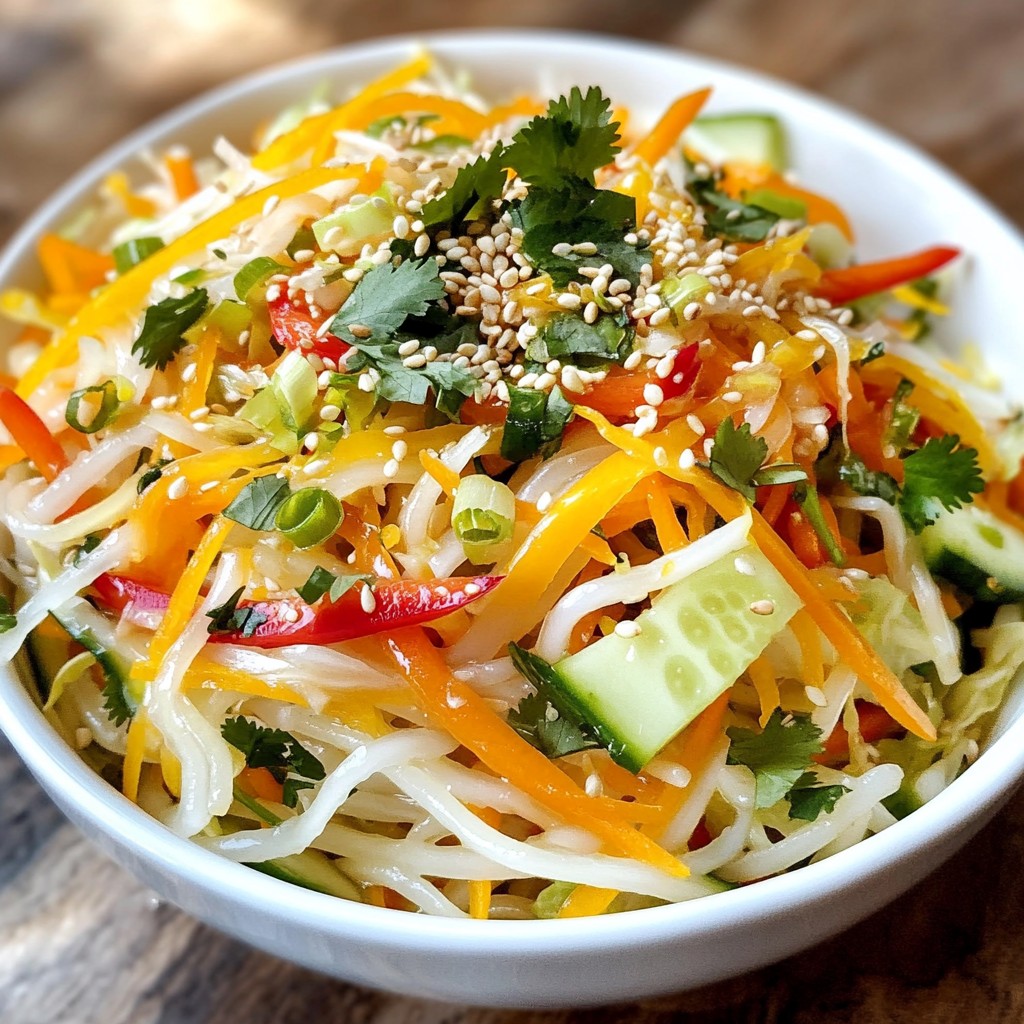
Looking for a fresh and tasty dish? You’ll love this Sesame Ginger Noodle Salad! It's quick to make and packed with flavor. Whether you're meal-prepping for the week or hosting friends, this salad fits all occasions. With a simple mix of crunchy veggies, soft noodles, and a zesty dressing, you’ll want to dive right in. Let’s explore how to whip up this easy, satisfying meal!
Why I Love This Recipe
- Fresh and Vibrant: This salad is packed with colorful vegetables that not only look beautiful but also provide a variety of nutrients and flavors.
- Quick to Prepare: With a total time of just 30 minutes, this recipe is perfect for a quick lunch or dinner without sacrificing taste.
- Customizable: You can easily adapt this salad by adding your favorite proteins or swapping out vegetables based on what you have on hand.
- Delicious Dressing: The sesame-ginger dressing adds a delightful depth of flavor that ties all the ingredients together beautifully.
Ingredients
Main Ingredients for Sesame Ginger Noodle Salad
For this salad, you will need:
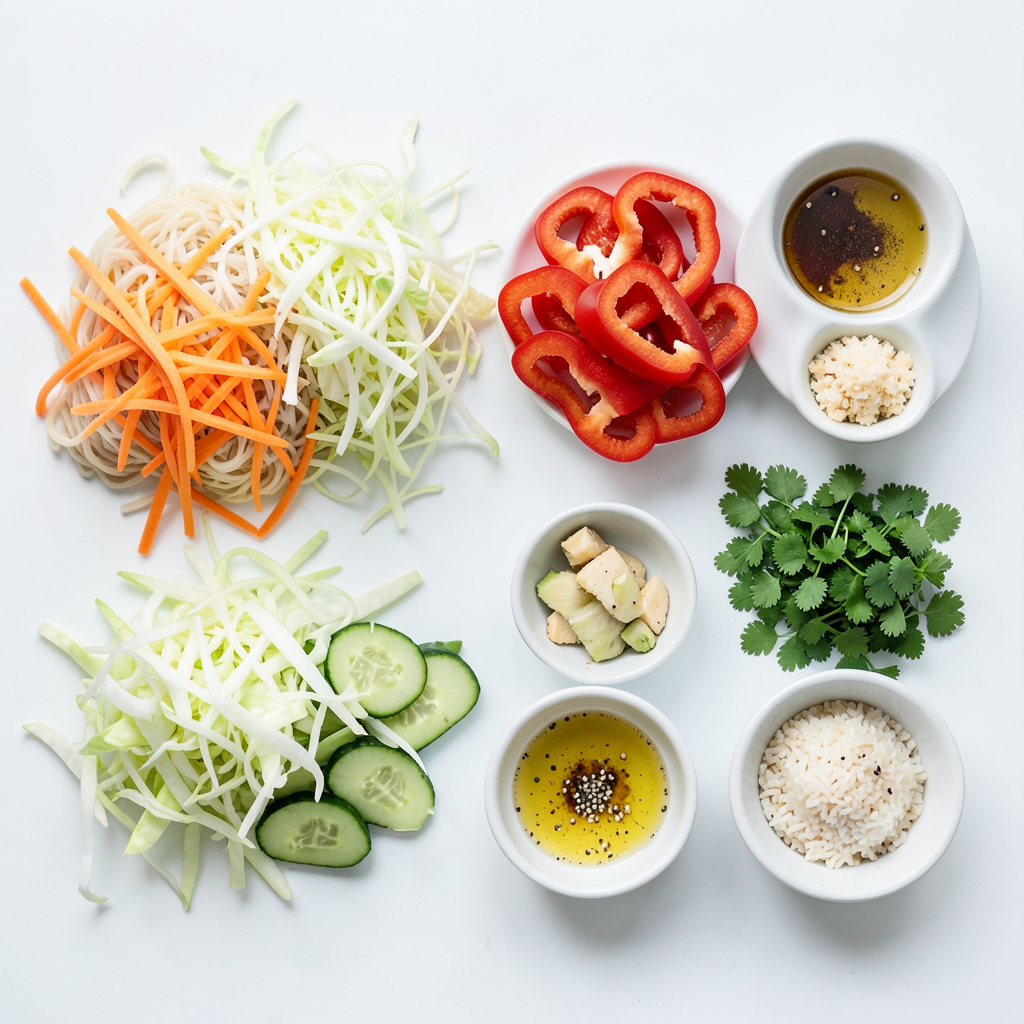
- 8 oz rice noodles
- 2 cups napa cabbage, finely shredded
- 1 cup carrots, cut into matchsticks (julienned)
- 1 red bell pepper, sliced into thin strips
- 1 cup cucumber, sliced thinly
- 3 green onions, chopped (including greens)
- 1/4 cup fresh cilantro, roughly chopped
- 1/4 cup toasted sesame seeds
These fresh ingredients create a crunch and color in the salad. The rice noodles serve as the base, making it filling yet light.
Dressing Ingredients
For the dressing, gather these items:
- 1/4 cup sesame oil
- 2 tablespoons fresh ginger, minced (about a 1-inch piece)
- 2 tablespoons soy sauce (or tamari for a gluten-free option)
- 1 tablespoon honey or agave syrup
- 2 teaspoons rice vinegar
- 1 garlic clove, minced
- Salt and pepper to taste
This dressing brings a burst of flavor. The ginger adds warmth, while the sesame oil gives a nutty kick.
Optional Garnishes
You can enhance your salad with these garnishes:
- Extra cilantro for freshness
- A drizzle of sesame oil for richness
These garnishes make the salad look and taste even better. They add a touch of color and extra flavor, making it more appealing to serve.
Step-by-Step Instructions
Preparing the Rice Noodles
To start, cook the rice noodles. Follow the package instructions. Usually, this takes about 5 to 8 minutes. They should be soft but firm, or al dente. After cooking, drain the noodles well. Rinse them under cold water. This stops the cooking process and cools them down. Place the cooled noodles in a bowl and set them aside for later.
Mixing the Vegetables
Next, grab a large mixing bowl. Add the napa cabbage, julienned carrots, red bell pepper, cucumber, green onions, and cilantro. Toss them gently to mix. You want everything to blend well. The colors should brighten your day. Each vegetable adds crunch and flavor to the salad.
Making the Dressing
Now, let’s make the dressing. In a smaller bowl, combine sesame oil, minced ginger, soy sauce, honey, rice vinegar, and minced garlic. Whisk these together until smooth. Taste the dressing and add salt and pepper as needed. This mixture adds a nice zing to the salad. The ginger and sesame oil bring a lovely depth of flavor.
Combining Everything
Pour the dressing over the vegetable mix. Gently toss to coat all the veggies. Then, add the cooled rice noodles to the bowl. Toss again, making sure the noodles mix well with the veggies. Finally, sprinkle toasted sesame seeds on top. They add a delightful crunch. You can serve this salad right away, or let it chill for 30 minutes. Chilling helps the flavors blend better. Enjoy your colorful and tasty dish!
Tips & Tricks
How to Perfectly Cook Rice Noodles
To cook rice noodles, start by boiling water in a pot. Once the water is boiling, add the noodles. Cook them for about 4 to 6 minutes or until they are soft but still firm. Drain the noodles in a colander. Rinse them under cold water to stop the cooking. This will keep them from getting mushy. Always check the package for the best cooking time.
Enhancing Flavor with Fresh Ingredients
Fresh ingredients make a big difference in your salad. Use crisp napa cabbage, bright red bell pepper, and crunchy cucumber. These veggies add color and texture. Fresh ginger in the dressing gives it a nice kick. Adding chopped cilantro at the end brightens the dish. Don’t skip the toasted sesame seeds; they add a nutty flavor and crunch. All these fresh ingredients work together for a tasty salad.
Suggested Serving Temperature
You can serve this salad cold or at room temperature. If you want a refreshing meal, chill it in the fridge for about 30 minutes. This lets the flavors mix well. If you prefer it warm, serve it right after mixing. Just remember, the salad tastes best when it’s fresh and vibrant!
Pro Tips
- Use Fresh Ingredients: Fresh vegetables enhance the flavor and texture of the salad. Opt for organic produce when possible to maximize freshness.
- Customize Your Veggies: Feel free to swap in any seasonal vegetables you love. Broccoli, snap peas, or radishes would add great crunch and color.
- Adjust the Dressing: Taste the dressing before mixing it in. Add more honey for sweetness or more vinegar for tang, depending on your preference.
- Serve Chilled: For the best flavor, allow the salad to chill in the refrigerator for at least 30 minutes before serving to let the flavors meld.
Variations
Adding Protein (Chicken, Tofu, or Shrimp)
You can easily add protein to your Sesame Ginger Noodle Salad. Chicken, tofu, or shrimp all work well. For chicken, grill or sauté until cooked, then slice it thin. If using tofu, press to remove water, then cube and sauté until golden. For shrimp, cook until they turn pink. Add your choice to the salad for a filling meal.
Gluten-Free Substitutions
For a gluten-free option, choose tamari instead of soy sauce. Tamari has a similar taste but is safe for gluten-sensitive diets. You can also swap rice noodles for gluten-free noodles. Look for options made from rice or quinoa. These changes keep the salad tasty and safe for everyone.
Creative Vegetable Swaps
Feel free to get creative with your vegetables. You can swap napa cabbage for green cabbage or bok choy. Instead of carrots, try using radishes for a peppery crunch. Bell peppers can be replaced with zucchini for a milder flavor. The key is to use vegetables you love, making the salad your own.
Storage Info
How to Store Leftover Salad
To keep your salad fresh, place it in an airtight container. Make sure to store it in the fridge. This helps keep the veggies crisp and tasty. If you add the dressing, it may make the noodles soggy. So, store the dressing on the side for best results.
Reheating Tips
You usually don’t need to reheat noodle salad. It tastes great cold! If you prefer it warm, use low heat. Warm it gently on the stove. Stir it often to avoid stickiness. You can also add a splash of water or extra dressing while heating. This keeps it moist.
Shelf Life of Ingredients
The salad lasts about 3 to 5 days in the fridge. The rice noodles can stay fresh for up to 7 days. The veggies are best within 2 to 3 days. Check for freshness before eating. If anything looks or smells off, toss it out. Always prioritize food safety!
FAQs
Can I make Sesame Ginger Noodle Salad in advance?
Yes, you can make this salad ahead of time. It tastes great after sitting a bit. Making it a few hours before serving allows the flavors to mix. Just keep it in the fridge. If you add the sesame seeds right before serving, they stay crunchy.
What can I substitute for soy sauce?
You can use tamari for a gluten-free option. Coconut aminos is another good choice. It has a slightly sweeter taste. If you want a low-sodium option, try reduced-sodium soy sauce. Each will still give your salad a nice flavor.
How do I make a spicy version of this salad?
To add spice, mix in red pepper flakes or sriracha. You can start with a small amount and add more to taste. If you like heat, consider adding fresh sliced jalapeños too. This will give your salad a nice kick and make it even more exciting!
In this blog post, we explored how to make a tasty Sesame Ginger Noodle Salad. We discussed key ingredients, step-by-step instructions, and tips to perfect your dish. You learned about tasty variations and how to store leftovers.
Overall, this salad is easy to make and fun to customize. You can enjoy it warm or cold. Experiment with your favorite flavors. Try adding protein or different veggies. Make it your own, and enjoy every bite!