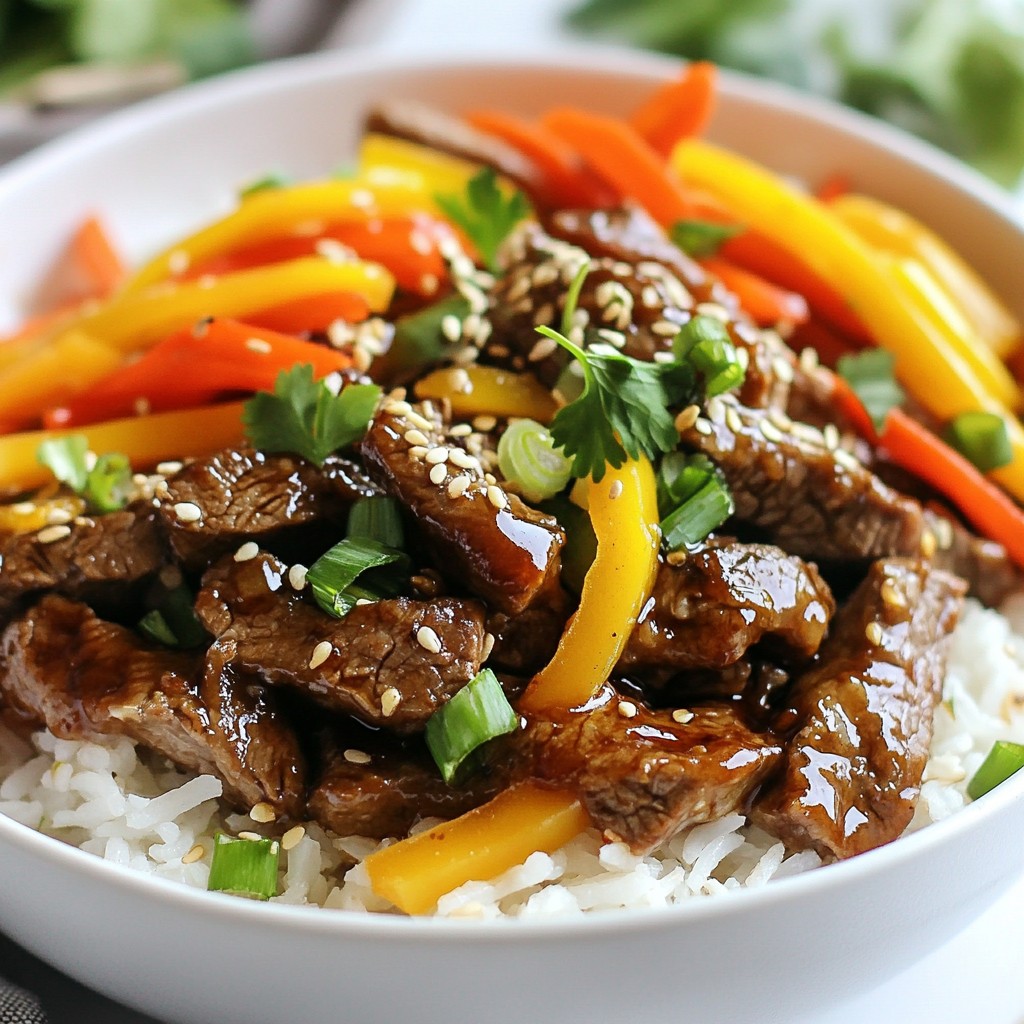
Get ready to dive into the world of Korean Beef Bulgogi Bowls! This tasty dish features tender beef marinated in a rich blend of soy sauce, garlic, and sweet gochujang. I’ll guide you step-by-step through the easy process of creating a flavorful meal that’s perfect for any night. Let’s make cooking fun and delicious with this quick and satisfying recipe. Your taste buds will thank you!
Why I Love This Recipe
- Flavorful Marinade: The combination of soy sauce, brown sugar, and gochujang creates a rich and savory marinade that infuses the beef with incredible flavor.
- Quick Cooking: Once marinated, the beef cooks quickly in just a few minutes, making this dish perfect for busy weeknights.
- Colorful Vegetables: The addition of vibrant vegetables like carrots and bell peppers not only adds nutrition but also makes the dish visually appealing.
- Customizable: This recipe is easily adjustable; you can swap in your favorite veggies or adjust the spice level to suit your taste.
Ingredients
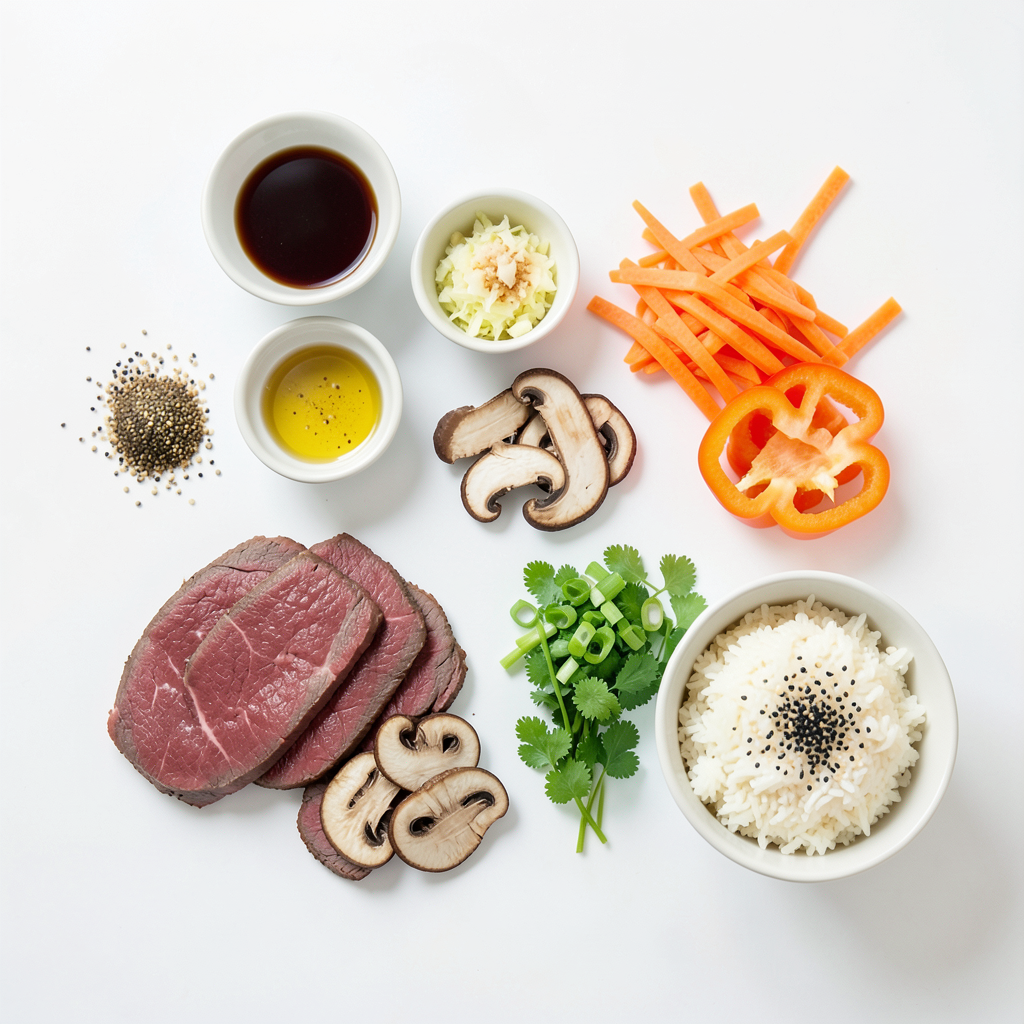
To create delicious Korean beef bulgogi bowls, you'll need fresh and vibrant ingredients. Here’s what to gather:
- 1 lb (450g) beef sirloin, thinly sliced
- Marinade ingredients:
- 1/4 cup soy sauce
- 2 tablespoons brown sugar
- 1 tablespoon sesame oil
- 2 cloves garlic, minced
- 1-inch piece of ginger, grated
- 1 tablespoon gochujang (Korean red chili paste)
- Vegetables:
- 1 large carrot, julienned
- 1 bell pepper (any color), sliced
- 1 cup shiitake mushrooms, sliced
- 2 green onions, chopped (white and green parts separated)
- Serving components:
- Cooked jasmine or sticky rice
- Sesame seeds, for garnish
- Fresh cilantro or parsley, for garnish
These ingredients create a savory and sweet balance. The beef absorbs the bold flavors from the marinade. The vegetables add crunch and color. The rice serves as a warm base to tie it all together.
Step-by-Step Instructions
Preparing the Marinade
Start by mixing the marinade. You need:
- 1/4 cup soy sauce
- 2 tablespoons brown sugar
- 1 tablespoon sesame oil
- 2 cloves garlic, minced
- 1-inch piece of ginger, grated
- 1 tablespoon gochujang
Whisk these ingredients in a large bowl. Make sure they blend well.
Next, add the thinly sliced beef. Use your hands to coat every piece in the marinade. This step is key for great flavor. Cover the bowl with plastic wrap. Place it in the fridge for at least 30 minutes. For the best taste, let it marinate for up to 2 hours.
Marinating the Beef
The recommended time to marinate beef is 30 minutes to 2 hours. This range allows the meat to soak up all the tasty flavors.
For effective marinating, remember these tips:
- Use a sealable bag if you prefer. This way, you can easily massage the marinade into the beef.
- Marinate in a shallow dish for better coverage.
Cooking the Beef and Vegetables
Now it's time to cook. Heat a large skillet or wok over medium-high heat. Once hot, add the marinated beef in small batches. This helps with even cooking. Sauté each batch for 3-4 minutes. Look for the beef to turn brown and fully cook.
After cooking the beef, remove it from the skillet and set it aside.
In the same skillet, add your vegetables:
- 1 large carrot, julienned
- 1 bell pepper, sliced
- 1 cup shiitake mushrooms, sliced
Stir-fry these veggies for about 4-5 minutes. You want them tender but still crisp.
Finally, add the cooked beef back into the skillet. Mix everything together and heat it for 1-2 more minutes. This step lets all the flavors combine nicely.
Serve the bulgogi over warm jasmine or sticky rice for a complete meal.
Tips & Tricks
Achieving Perfectly Cooked Beef
To cook beef just right, follow these tips:
- Cook Time: Sauté beef for 3-4 minutes until it turns brown.
- Batch Cooking: Avoid overcrowding the pan. Cook in small batches.
- Common Mistakes: Don't skip marinating. It adds flavor. Also, don't cook on too high heat. This can burn the beef.
Flavor Enhancements
To make your bulgogi even tastier, consider these ideas:
- Add Ingredients: Try adding sliced scallions or a splash of rice vinegar. They brighten the dish.
- Balance Flavors: If too sweet, add more soy sauce. If too salty, a pinch of brown sugar helps.
Presentation Ideas
A beautiful dish makes it more enjoyable. Here’s how to present your meal:
- Garnishing Techniques: Use fresh cilantro or parsley for color. Sprinkle sesame seeds for crunch.
- Serving Suggestions: Serve bulgogi over warm rice in colorful bowls. Add a side of kimchi for authentic flair.
Pro Tips
- Marinating Time: For the best flavor, allow the beef to marinate for at least 2 hours, or even overnight. This will enhance the taste and tenderness of the meat.
- Vegetable Variations: Feel free to mix in other vegetables such as zucchini or snap peas for added nutrition and color. Just be sure to cut them to a similar size for even cooking.
- Serving Suggestions: Serve your bulgogi bowls with a side of kimchi for a traditional Korean touch, and consider adding a fried egg on top for extra richness.
- Cleaning Up: To make clean-up easier, soak your marinating bowl and utensils in hot soapy water immediately after use. This helps to loosen any sticky marinade residue.
Variations
Different Protein Options
You can swap beef for chicken, pork, or tofu in this recipe. Each choice brings a unique flavor. For chicken, use boneless thighs or breasts, sliced thinly. For pork, tenderloin works well. If you choose tofu, use firm or extra-firm tofu and press it to remove excess moisture.
Cooking times will change based on the protein. Chicken usually takes about 5-7 minutes to cook. Pork may need a little longer, around 6-8 minutes. Tofu will cook in about 4-5 minutes, just enough to warm it through.
Vegetarian & Vegan Adaptations
Creating a plant-based bulgogi bowl is simple and fun. Use marinated mushrooms or jackfruit for a meaty texture. You can also use tempeh or seitan as great meat alternatives. For broth, use vegetable stock instead of beef broth.
Marinating these ingredients with the same sauce adds great flavor. You can also add more veggies like zucchini or bell peppers to make it colorful and filling.
Seasonal and Regional Variations
Incorporating seasonal vegetables can enhance your bulgogi bowl. In spring, try asparagus or snap peas. In summer, zucchini or corn adds sweetness. Fall brings great flavors with butternut squash or Brussels sprouts. In winter, root vegetables like sweet potatoes work well.
Traditional side dishes to serve with bulgogi bowls include kimchi or pickled radishes. These dishes add crunch and tang, making your meal even more exciting.
Storage Info
Storing Leftovers
To keep your Korean Beef Bulgogi Bowls fresh, store leftovers right away. Use airtight containers to keep the flavors locked in. Glass containers work well, as they do not retain odors. You can also use plastic containers, but ensure they seal tightly.
Reheating Instructions
When it’s time to eat the leftovers, you can reheat them easily. The best way is to use a skillet. Heat the skillet over medium heat and add a splash of water. This helps keep the beef juicy. Stir for about 5-7 minutes until it’s warm. You can also use the microwave. Heat in 30-second bursts, stirring in between, until hot.
Shelf Life Information
You can store the bulgogi and rice in the fridge for about 3-4 days. If you want to keep them longer, consider freezing. They can last up to 2-3 months in the freezer. Always check for spoilage. If the beef smells off or has a slimy texture, it’s best to throw it away.
FAQs
What is Korean Beef Bulgogi?
Korean beef bulgogi is a popular dish made from thinly sliced beef. The word "bulgogi" means "fire meat." It often features a sweet and savory marinade. This dish has roots in Korean history, dating back to the Goguryeo era. Bulgogi is more than just food; it represents Korean culture and hospitality. You can find it at many Korean BBQ restaurants, enjoyed by families and friends alike.
Can I make Korean Beef Bulgogi in advance?
Yes, you can make bulgogi ahead of time. Prepare the marinade and beef the day before. Let the beef soak in the marinade in the fridge. This will deepen the flavor. You can also cook the beef and vegetables in advance. Store them in airtight containers. When it’s time to eat, just reheat and serve over rice.
What can I serve with Korean Beef Bulgogi Bowls?
You can serve bulgogi bowls with several tasty sides. Kimchi is a classic choice; its tangy flavor pairs well. You might also enjoy pickled cucumbers or steamed broccoli. For drinks, try a cold Korean beer or a sweet rice drink called Sikhye. These choices will enhance your meal and create a complete dining experience.
Is Korean BBQ sauce the same as bulgogi marinade?
Korean BBQ sauce and bulgogi marinade share some ingredients, but they are not the same. Bulogi marinade is sweeter and has a richer flavor due to brown sugar and gochujang. BBQ sauce has a smokier taste and is often thicker. While you can use BBQ sauce for grilling, bulgogi marinade is best for marinating and stir-frying.
This blog post covered how to make delicious Korean Beef Bulgogi. You learned about the best ingredients, how to prepare and marinate the beef, and cooking tips for perfect flavor. We also explored variations for proteins and plant-based options. I shared smart storage tips to keep your meal fresh. Remember, this dish is adaptable and packed with flavor. Enjoy your cooking adventure and impress your friends with this tasty meal!