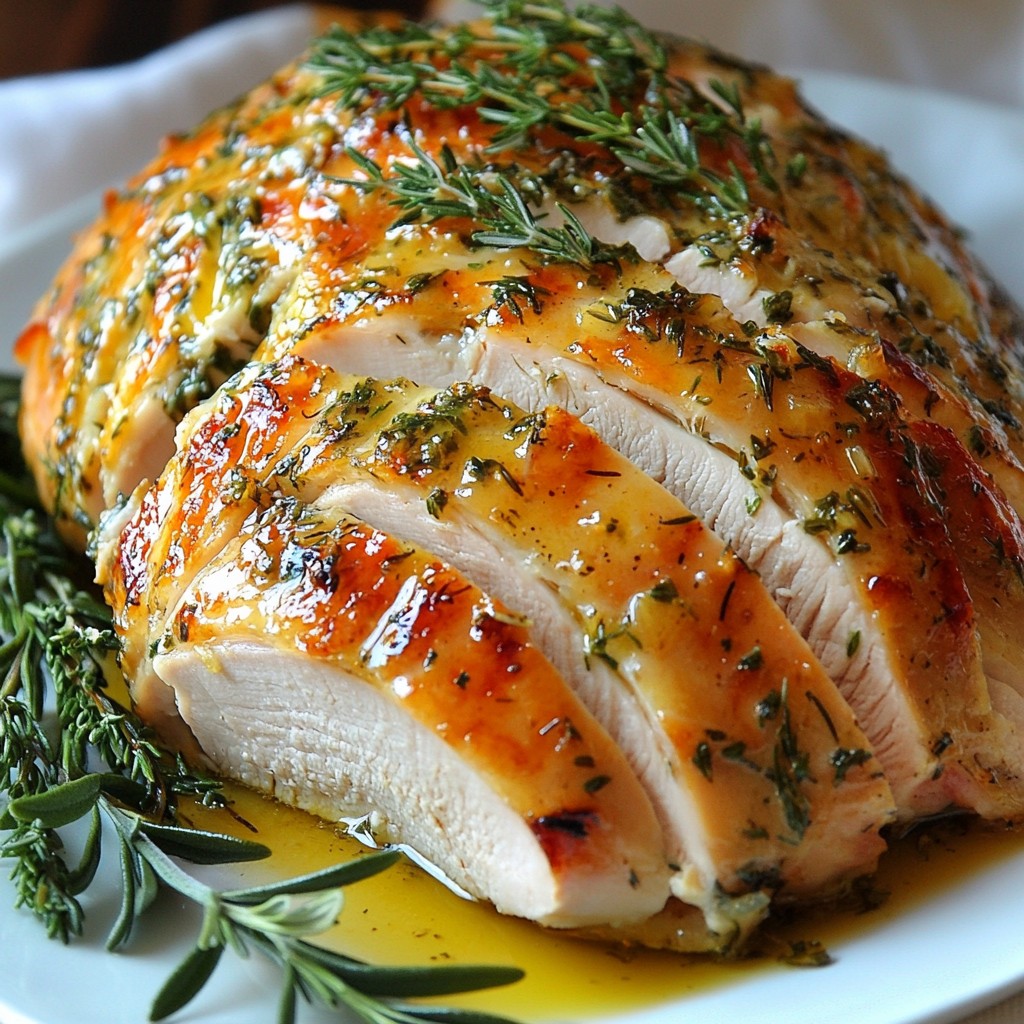
Are you ready to impress your guests with a masterpiece? The Herb Butter Roasted Turkey Breast is juicy, flavorful, and perfect for any occasion. I’ll guide you through each step, from the essential ingredients to cooking tips, ensuring your turkey turns out succulent every time. Say goodbye to dry turkey forever! Keep reading to discover how to make your turkey the star of your feast.
Why I Love This Recipe
- Flavorful Herb Butter: The combination of garlic and fresh herbs creates a rich and aromatic butter that infuses the turkey with incredible flavor.
- Moist and Juicy: Roasting the turkey breast in chicken broth helps to keep it moist, resulting in tender slices every time.
- Simple Preparation: With just a few steps, this recipe is easy to follow, making it perfect for both novice and experienced cooks.
- Beautiful Presentation: The garnishing with fresh herbs not only enhances the flavor but also adds a touch of elegance to your table.
Ingredients
Essential Ingredients
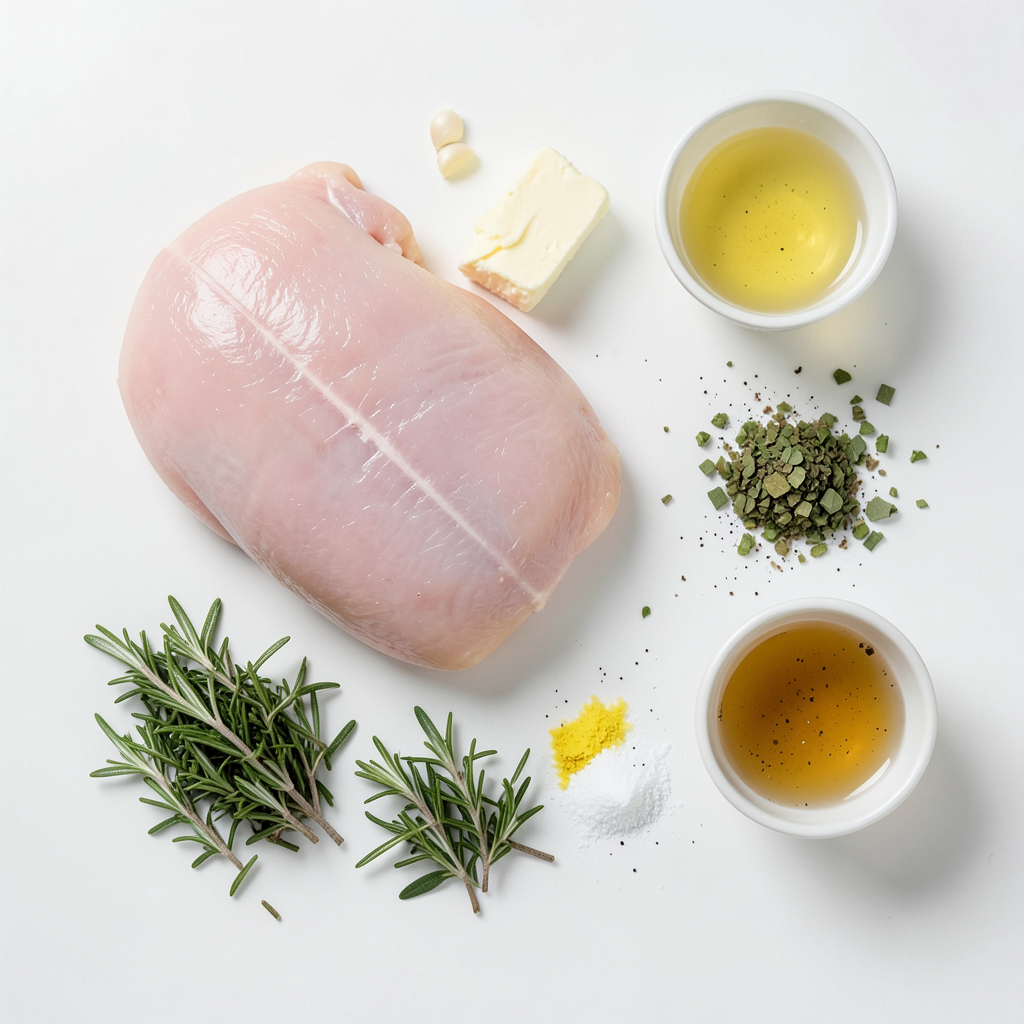
- 1 boneless turkey breast (4-5 lbs)
- 1/2 cup unsalted butter, softened at room temperature
- 4 cloves garlic, finely minced
- 2 tablespoons fresh rosemary, finely chopped
- 2 tablespoons fresh thyme, finely chopped
- 1 tablespoon fresh sage, finely chopped
- Zest of 1 lemon (about 1 teaspoon)
- Juice of 1 lemon (about 2 tablespoons)
- Salt and freshly ground black pepper, to taste
- 1/2 cup low-sodium chicken broth
- Fresh herbs for garnish (optional, such as rosemary or thyme)
Seasoning Suggestions
For a rich flavor, I recommend using rosemary, thyme, and sage. These herbs work well with turkey and give it a fresh taste. When seasoning, add salt and pepper to the herb butter. This will enhance the turkey's natural flavor. Make sure to season both under the skin and on the outside.
Optional Garnishes
For a beautiful touch, sprinkle fresh herbs on top of the sliced turkey. You can use extra rosemary or thyme. Pair the turkey with seasonal roasted vegetables or a fresh salad to create a complete meal. These sides add color and flavor, making your dish even more appealing.
Step-by-Step Instructions
Preparation Steps
Preheating the oven Start by preheating your oven to 350°F (175°C). This temperature cooks the turkey evenly.
Making the herb butter In a bowl, mix 1/2 cup of soft butter with 4 minced garlic cloves. Add 2 tablespoons each of chopped rosemary, thyme, and 1 tablespoon of chopped sage. Stir in the zest and juice of 1 lemon. Season with salt and pepper. Mix until smooth.
Turkey Preparation
Drying the turkey breast Take your boneless turkey breast and pat it dry with paper towels. This step helps the skin get crispy.
Loosening the skin and applying herb butter Gently slide your fingers under the skin of the turkey. Be careful not to tear it. Spread half of the herb butter under the skin. Rub the rest all over the outside of the turkey.
Cooking Process
Setting up the roasting pan Place the turkey breast in a roasting pan, with the breast side up. Pour 1/2 cup of low-sodium chicken broth into the pan. This keeps the turkey moist while roasting.
Roasting time and temperature guidelines Put the pan in the oven. Roast for about 1 hour and 30 minutes. Use a meat thermometer to check if the turkey reaches 165°F (74°C). Baste the turkey with pan juices every 30 minutes for extra flavor.
Tips & Tricks
Achieving Juiciness
To keep your turkey breast juicy, resting is key. After roasting, let the turkey sit for 15-20 minutes. This helps the juices stay in the meat. If you slice too soon, the juices will run out, and the meat will dry.
Basting is also important. Every 30 minutes, spoon the pan juices over the turkey. This adds flavor and moisture. It helps create a beautiful, golden-brown skin.
Flavor Enhancements
You can enhance flavor with more herbs or spices. Consider adding parsley, dill, or even a pinch of cayenne for heat. Mix these into your herb butter to create new tastes.
For even cooking, make sure your turkey breast is at room temperature before roasting. This helps it cook evenly. Also, use a meat thermometer to check the internal temperature. Aim for 165°F (74°C) for safe eating.
Presentation Ideas
When serving, think about how to plate your turkey. Arrange the sliced turkey on a large platter. Garnish with fresh herbs like rosemary or thyme. This adds color and makes it look fancy.
Pair your turkey with seasonal sides. Roasted vegetables or a fresh salad work well. They add balance and make your meal more complete.
Pro Tips
- Use Fresh Herbs: Opt for fresh herbs whenever possible, as they provide a more vibrant flavor compared to dried herbs.
- Let the Turkey Rest: Always allow the turkey to rest after roasting; this helps retain the juices and keeps the meat moist.
- Check Temperature: Use a meat thermometer to check for doneness; turkey should reach an internal temperature of 165°F (74°C) for safe consumption.
- Baste Regularly: Baste the turkey every 30 minutes with the pan juices to enhance flavor and moisture during roasting.
Variations
Alternative Seasonings
You can mix up the herb butter to create different flavors. Try using basil or oregano instead of rosemary or thyme. For a twist, add orange zest or lime juice to your butter. These citrus flavors brighten the dish and add a fresh taste.
Cooking Methods
If you want to try different cooking methods, a slow cooker works well. Cook on low for 6-8 hours. This method keeps the turkey moist and tender. You can also use a pressure cooker for a faster option. Cook on high for about 45 minutes. This gives juicy turkey in less time.
Dietary Adjustments
For gluten-free options, ensure your chicken broth is gluten-free. You can also swap out the butter for a plant-based alternative. This helps reduce fat while still keeping the flavor. Using a lean turkey breast can also help cut down on fat. Adjust your seasonings to keep the taste bold and tasty.
Storage Info
Refrigeration Guidelines
To store leftover turkey, first, let it cool to room temperature. Wrap it tightly in plastic wrap or foil. You can also place it in an airtight container. This keeps it fresh. Store the turkey in the fridge. It will last for about 3 to 4 days.
Freezing Tips
For freezing cooked turkey, slice it into portions. Wrap each piece in plastic wrap, then foil. This prevents freezer burn. You can also use a vacuum sealer. The turkey will stay fresh for up to 6 months in the freezer. To thaw, place it in the fridge overnight. For quick thawing, you can use cold water. Just make sure to change the water every 30 minutes. Reheat turkey in the oven or microwave until hot.
Using Leftovers
You can make many dishes with leftover turkey. Try turkey sandwiches with your favorite toppings. Turkey salad with mayo, celery, and grapes is tasty too. It also works well in soups. Add it to vegetable or noodle soup for extra flavor. Toss it into salads for a protein boost. These ideas make using leftovers fun and easy!
FAQs
How long to roast a turkey breast?
Roasting time depends on the weight of your turkey breast. For a 4 to 5-pound turkey breast, roast it for about 1 hour and 30 minutes. Always check with a meat thermometer. The internal temperature should reach 165°F (74°C). Keep in mind that larger breasts may need a little extra time.
What herbs pair well with turkey?
Turkey loves herbs! Here are the top herbs to use:
- Rosemary
- Thyme
- Sage
- Parsley
These herbs add flavor and freshness. You can mix them in your herb butter for a tasty boost.
Can I use a frozen turkey breast?
Yes, you can use a frozen turkey breast. However, you must thaw it first. The best way is to put it in the fridge for 24 hours per 5 pounds. If you're in a hurry, you can also thaw it in cold water. Just change the water every 30 minutes.
What to serve with herb butter roasted turkey breast?
Pair your turkey breast with tasty sides. Here are some great options:
- Roasted vegetables
- Mashed potatoes
- Green beans
- A fresh salad
For drinks, consider serving white wine or sparkling water. These complement the meal well.
In this blog post, we covered everything you need for a delicious herb butter roasted turkey breast. From essential ingredients to seasoning tips, you now have the tools to create a tasty dish. Remember the importance of resting the turkey for juiciness and consider various cooking methods and flavor enhancements. Don't forget to explore creative ways to use leftovers. Whether you’re cooking for a special occasion or just a family dinner, these tips will lead you to turkey success. Enjoy your cooking experience!