
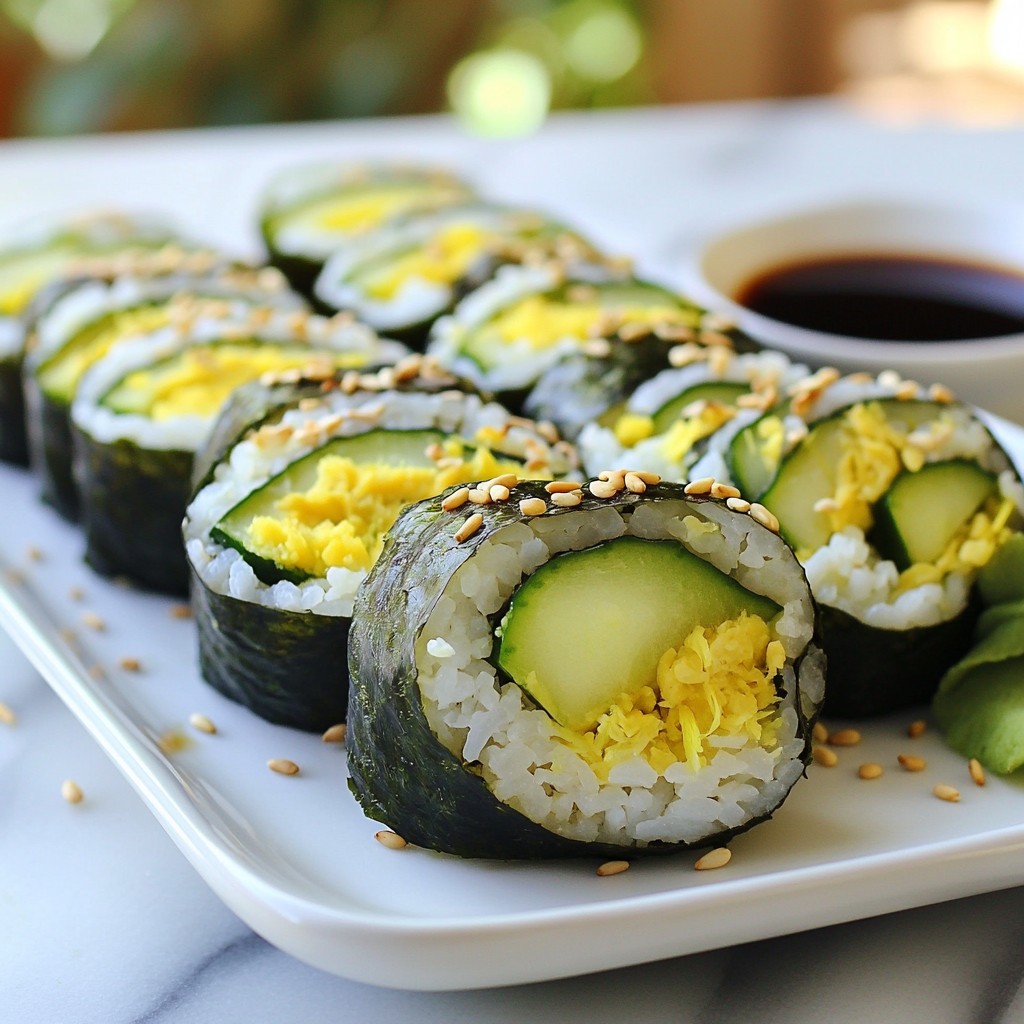
If you’re craving a fresh and tasty treat, Cucumber Avocado Sushi Rolls are your answer! These delicious rolls are packed with flavor and nutrient-rich ingredients, making them perfect for a light meal or snack. In this guide, I'll share everything you need to know, from selecting the right ingredients to mastering the rolling technique. Get ready to impress your friends and family with this delightful sushi dish!
Why I Love This Recipe
- Fresh Ingredients: The combination of cucumber and avocado provides a refreshing taste and a creamy texture that makes each bite delightful.
- Healthy Option: This sushi roll is packed with wholesome ingredients, making it a great choice for a nutritious meal or snack.
- Customization: You can easily swap out ingredients or add your favorite veggies and herbs to suit your taste preferences.
- Fun Activity: Making sushi at home is a fun and interactive experience, perfect for gatherings or family cooking nights.
Ingredients
Complete list of ingredients
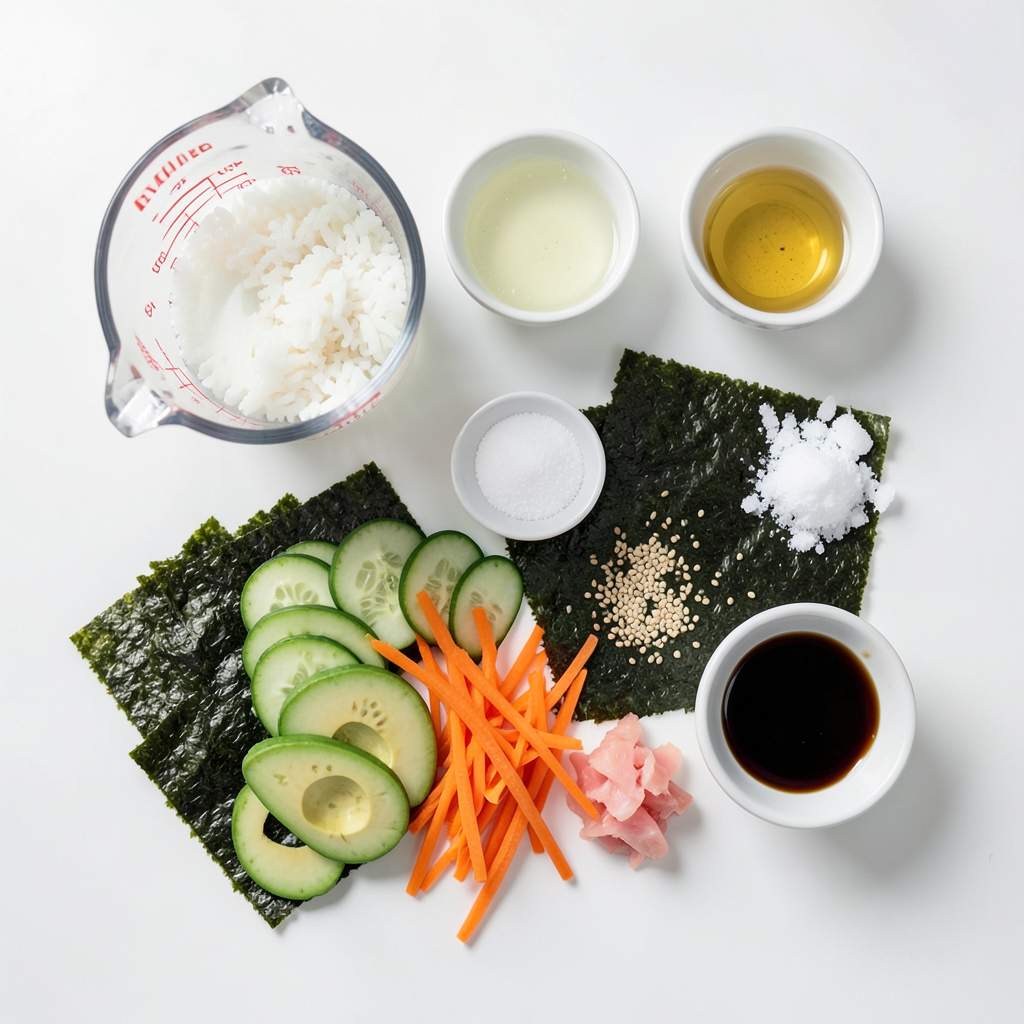
To make cucumber avocado sushi rolls, gather these simple ingredients:
- 1 cup sushi rice
- 1 ¼ cups water
- 3 tablespoons rice vinegar
- 1 tablespoon sugar
- ½ teaspoon salt
- 4 sheets nori (seaweed)
- 1 medium cucumber, julienned
- 1 ripe avocado, sliced into thin strips
- 1 carrot, julienned (optional)
- 2 tablespoons toasted sesame seeds
- Soy sauce (for dipping)
- Pickled ginger (for serving)
Measurement conversions for international readers
Here are useful conversions for those outside the U.S.:
- 1 cup of sushi rice = 240 mL
- 1 ¼ cups of water = 300 mL
- 3 tablespoons = 45 mL
- 1 tablespoon = 15 mL
- ½ teaspoon = 2.5 mL
Nutritional information per serving
One serving of cucumber avocado sushi rolls contains:
- Calories: 250
- Protein: 5g
- Carbohydrates: 50g
- Dietary Fiber: 4g
- Sugars: 1g
- Fat: 5g
- Sodium: 200mg
This information helps you track your diet while enjoying these fresh rolls.
Step-by-Step Instructions
Preparing the sushi rice
To make sushi rolls, start with the rice. Rinse 1 cup of sushi rice under cold water. Use a fine mesh strainer and rinse until the water runs clear. This step removes extra starch. After rinsing, drain the rice well.
Next, combine the rinsed rice with 1 ¼ cups of water in a medium saucepan. Bring this mixture to a boil over high heat. Once boiling, lower the heat and cover it. Let it simmer for about 15 minutes. The rice should become tender and absorb the water. After cooking, take the pot off the heat and let it sit for 10 minutes, covered.
In a small bowl, mix 3 tablespoons of rice vinegar, 1 tablespoon of sugar, and ½ teaspoon of salt. Stir until dissolved. Once the rice cools slightly, fold this mixture into the rice. Use a wooden spoon or spatula for even mixing. Allow the seasoned rice to cool completely.
Rolling techniques for sushi
Now it’s time to roll the sushi. Place a sheet of nori, shiny side down, on a bamboo sushi mat or a clean, flat surface. Wet your hands with water to stop the rice from sticking. Take about ¼ of the sushi rice and spread it evenly on the nori, leaving about one inch at the top.
In the center of the rice, add a line of julienned cucumber, sliced avocado, and optional julienned carrot. Sprinkle 2 tablespoons of toasted sesame seeds over the filling.
Starting from the edge nearest you, roll the sushi away from yourself. Use the mat to help you create a tight roll. When you reach the bare edge of the nori, moisten it lightly with water to seal the roll.
Slicing and serving the rolls
After rolling, use a sharp knife to slice the roll into 6 to 8 bite-sized pieces. To keep the cuts clean, wipe the knife with a damp cloth between each cut.
Repeat this process with the remaining nori sheets and fillings until you finish all the ingredients.
Arrange the sushi rolls on a platter. Serve with soy sauce for dipping and pickled ginger for a refreshing taste. Enjoy your delightful cucumber avocado sushi rolls!
Tips & Tricks
Best practices for sushi rice preparation
To make great sushi rice, rinse it well. This removes excess starch. Use a fine mesh strainer. Rinse until the water runs clear. After that, let it drain. Cook the rice with 1 ¼ cups of water. Bring it to a boil and then simmer. Let it steam with the lid on after cooking. Mixing in rice vinegar, sugar, and salt adds flavor when rice cools.
How to keep sushi rolls from sticking
Wet your hands before handling sushi rice. This will help keep it from sticking. Keep a bowl of water nearby. Dip your fingers in the water as needed. You can also wet the cutting board or mat. This helps with rolling and slicing.
Perfecting the rolling technique
Start with a sheet of nori, shiny side down. Place the rice on the nori, leaving space at the top. Add your fillings in a line. Use the mat to help roll it tightly. When you reach the end, moisten the edge with water. This helps seal the roll. For clean cuts, use a sharp knife. Wipe the knife with a damp cloth after each slice.
Pro Tips
- Rinse the Rice: Thoroughly rinsing the sushi rice removes excess starch, which helps achieve the perfect sticky texture needed for rolling.
- Cool Down Properly: Let the seasoned rice cool to room temperature before rolling. This prevents the nori from becoming soggy and helps the rice maintain its shape.
- Use a Sharp Knife: A sharp knife ensures clean cuts when slicing your rolls. Wiping the knife with a damp cloth between cuts will help keep the edges neat.
- Experiment with Fillings: Feel free to get creative with your sushi rolls! Substitute the cucumber with other crunchy vegetables or add fresh herbs like cilantro for a unique flavor.
Variations
Substituting vegetables for unique flavors
You can switch out cucumber for other crunchy veggies. Try using bell peppers, carrots, or zucchini. Each choice brings a new taste and texture. If you want a spicy kick, add jalapeño strips! Herbs like cilantro or mint can also add fresh notes. Experiment to find your favorite mix!
Adding proteins or additional toppings
Feel free to boost your sushi rolls with proteins. Cooked shrimp or crab can add a delightful twist. You can also use tofu for a vegetarian option. Sprinkle some sesame seeds or chopped nuts on top for extra crunch. Adding these elements can make your rolls more filling and fun.
Vegan and gluten-free adaptations
To make these rolls vegan, just stick to veggies and avocado. Use gluten-free soy sauce for dipping to keep it safe for everyone. You can even try using quinoa instead of rice for a unique base. This way, you cater to various dietary needs while keeping the flavors vibrant!
Storage Info
Best practices for storing leftover sushi
To keep leftover sushi fresh, wrap it in plastic wrap. This helps to prevent air from drying it out. Place it in an airtight container. Store it in the fridge right away. Sushi is best eaten within one day. If you wait too long, the rice gets hard, and the veggies lose their crunch.
Reheating tips for sushi rice
If you need to reheat sushi rice, use a microwave. Place the rice in a bowl and sprinkle a little water on top. Cover the bowl with a damp paper towel. Heat it for about 20 seconds. Check if it is warm enough. You can repeat the heating process if needed. This method keeps the rice soft and moist.
Shelf life of sushi rolls in the refrigerator
Sushi rolls last about 24 hours in the fridge. After that, the taste and texture change. The nori may get soggy, and the veggies can wilt. It is best to consume them fresh for the best taste. If you have leftovers, make sure to eat them soon!
FAQs
How to make cucumber avocado sushi rolls without nori?
You can use thinly sliced cucumber as a wrap instead of nori. Select firm cucumbers and slice them lengthwise. Lay the cucumber slices on a flat surface. Spread sushi rice on top, leaving space at the ends. Add avocado strips and any other fillings. Roll it up tightly and slice it into pieces.
Can sushi rolls be frozen for later use?
Sushi rolls do not freeze well. The rice can become mushy when thawed. If you must freeze, wrap each roll tightly in plastic wrap. Place in an airtight container to limit freezer burn. Consume within a month for best quality. However, fresh sushi tastes much better!
What are some popular dipping sauces for sushi?
Soy sauce is the classic choice for sushi dipping. It adds a salty flavor that complements the rolls. You can also try spicy mayo for a creamy kick. Ponzu sauce offers a bright, citrusy taste. Many enjoy sweet eel sauce for a rich, sweet contrast.
This guide covered key sushi-making steps, from choosing ingredients to storing leftover rolls. You learned how to prepare sushi rice, roll techniques, and variations for different diets. Remember, sushi-making is about practice and creativity. Use these tips to try new flavors or adapt recipes. The joy of making sushi at home is worth the effort. Enjoy sharing your sushi creations with friends and family. Keep experimenting to perfect your skills!