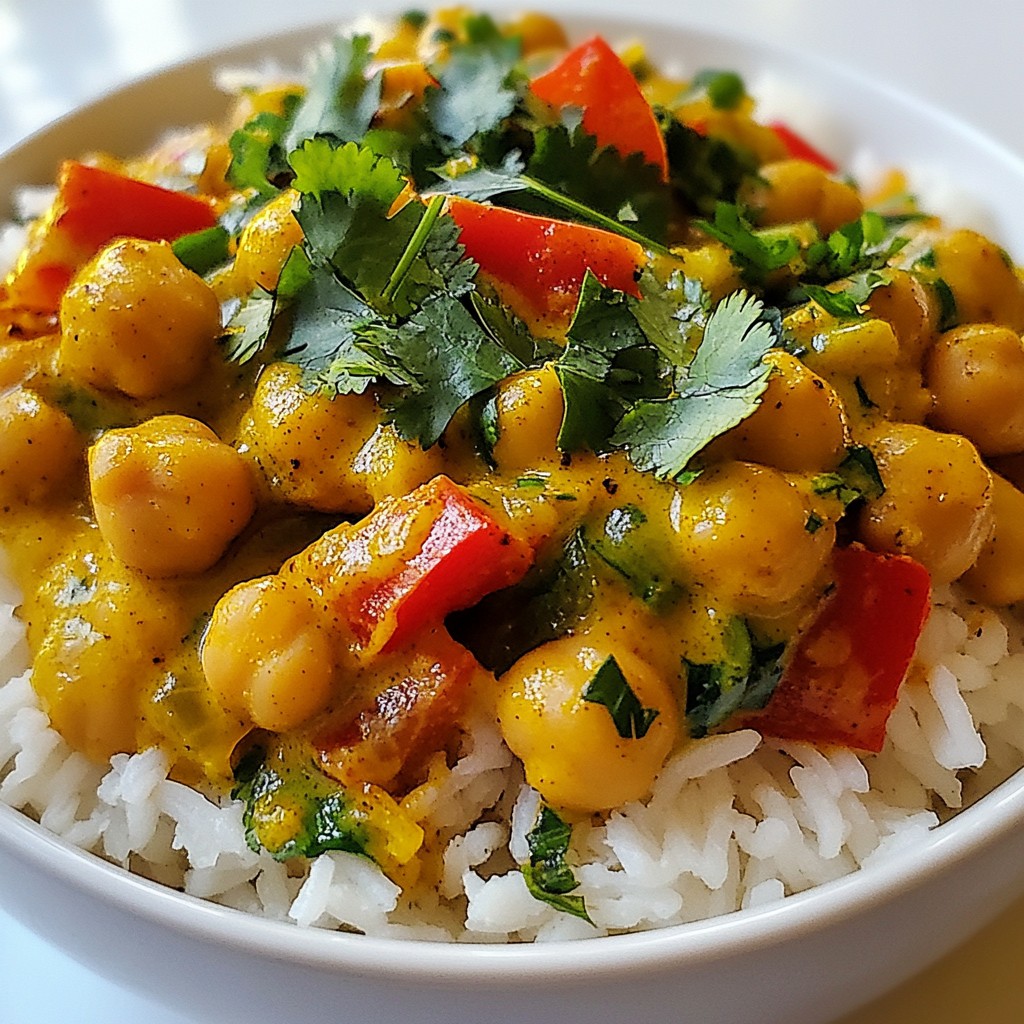
Looking for a warm, tasty dish that's easy to make? Coconut Chickpea Curry is your answer! Packed with flavor, this meal is full of healthy ingredients like chickpeas, coconut milk, and spices. I’ll walk you through the simple steps to create a comforting curry at home. Whether you’re a cooking pro or a beginner, you’ll love how quickly this dish comes together. Let’s dive into making your new favorite recipe!
Why I Love This Recipe
- Flavor Explosion: This curry is a delightful blend of spices and creamy coconut that creates a tropical taste experience.
- Quick and Easy: With a prep time of just 10 minutes, this recipe is perfect for busy weeknights or last-minute dinners.
- Nutritious Ingredients: Packed with chickpeas and vegetables, this dish is not only delicious but also healthy and satisfying.
- Versatile Serving Options: Serve it over rice, quinoa, or with naan, making it a flexible meal for any occasion.
Ingredients
Main Ingredients
- 1 can (15 oz) chickpeas, thoroughly drained and rinsed
- 1 tablespoon coconut oil
- 1 medium onion, finely diced
- 3 cloves garlic, minced
- 1 tablespoon fresh ginger, grated
- 1 bell pepper (choose red or yellow), chopped into bite-sized pieces
Liquid Components
- 1 can (14 oz) creamy coconut milk
- 1 cup vegetable broth (low-sodium, if preferred)
Spices and Seasonings
- 2 tablespoons curry powder (adjust to taste)
- 1 teaspoon ground turmeric
- 1 teaspoon ground cumin
- 1 teaspoon salt (or to taste)
- 1 tablespoon freshly squeezed lime juice
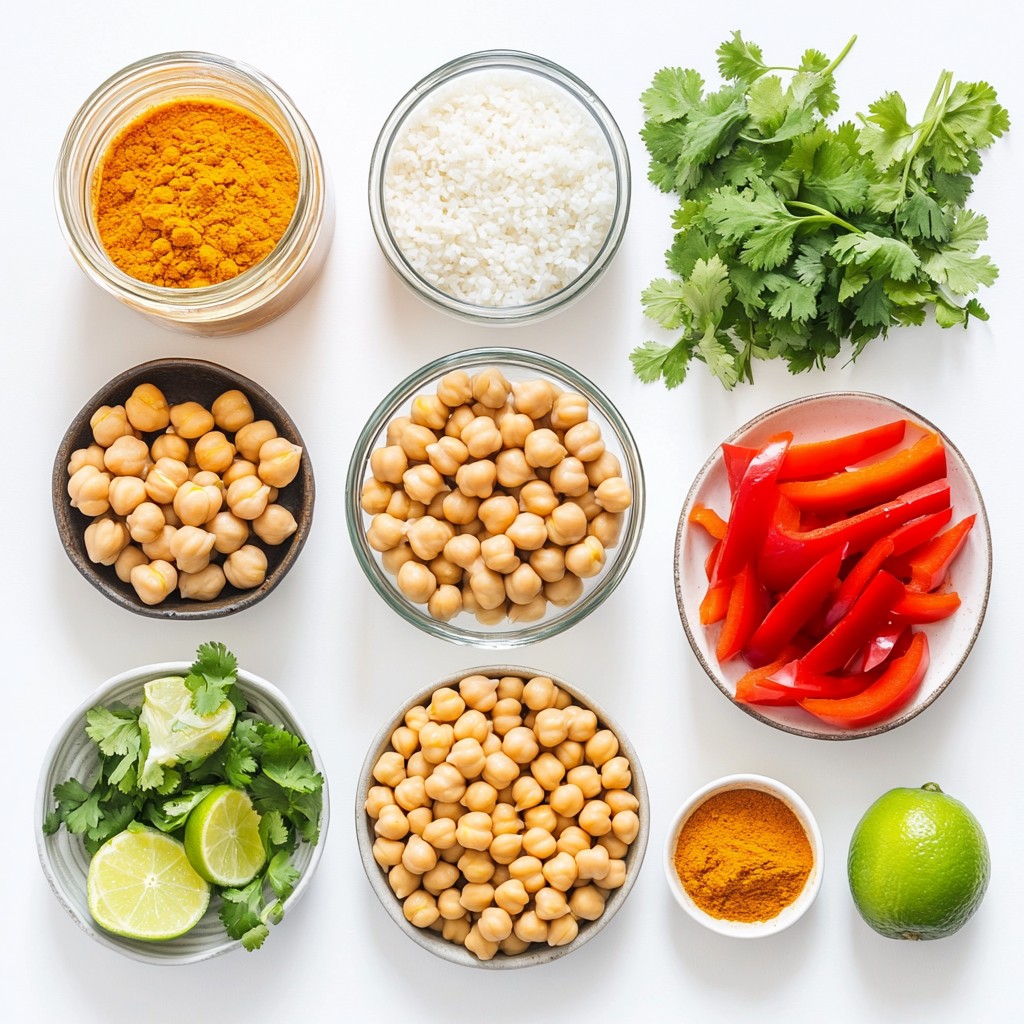
In this recipe, chickpeas are the star. They add protein and fiber. I use coconut oil for a rich flavor. It has a smooth and light taste. Onion, garlic, and ginger create a flavorful base. The bell pepper adds a nice crunch and color.
Next, we have coconut milk. It gives the curry a creamy texture. Vegetable broth adds depth to the dish.
The spices are key to this recipe. Curry powder gives warmth and spice. Ground turmeric adds a golden hue. Ground cumin adds earthiness. A touch of salt helps bring all the flavors together. Lastly, lime juice brightens the dish and adds freshness.
Gather these ingredients before you start. They come together easily to create a yummy meal.
Step-by-Step Instructions
Preparation Steps
1. Sautéing the onion, garlic, and ginger
Start by heating 1 tablespoon of coconut oil in a large pot. Use medium heat until the oil melts and shimmers. Add 1 finely diced onion. Cook for about 5 minutes. Stir it often until the onion turns soft and clear. Next, add 3 minced garlic cloves and 1 tablespoon of grated fresh ginger. Cook for 1-2 minutes. The aroma will fill your kitchen.
2. Adding the bell pepper
Now, fold in 1 chopped bell pepper. You can use red or yellow. Sauté this for another 3-4 minutes. The bell pepper should become tender.
Cooking the Curry
1. Incorporating spices and liquids
Sprinkle in 2 tablespoons of curry powder, 1 teaspoon of ground turmeric, and 1 teaspoon of ground cumin. Stir well to coat the veggies. Let this cook for 1 minute. This step boosts the flavors. Gradually pour in 1 can of creamy coconut milk and 1 cup of vegetable broth. Stir gently to mix everything. Bring this mixture to a gentle simmer.
2. Simmering with chickpeas
Carefully add 1 can of drained and rinsed chickpeas. Stir well to combine them with the sauce. Let the curry simmer for 15-20 minutes. Stir occasionally. This helps the curry thicken nicely.
Final Touches
1. Adjusting seasoning
Once thickened, taste your curry. Adjust the salt, adding about 1 teaspoon or to your liking. This step is key for a balanced flavor.
2. Adding lime juice
Stir in 1 tablespoon of freshly squeezed lime juice. This adds brightness and freshness to the dish.
Serve your tropical coconut chickpea curry over fluffy rice or quinoa. Top it with fresh cilantro for a lovely touch!
Tips & Tricks
Recipe Enhancements
Adjusting spice levels If you want more heat, add red pepper flakes or fresh chili. For milder curry, reduce curry powder. Start with less, and taste as you go. This way, you can find what suits you best.
Adding vegetables You can add more veggies for extra nutrition. Try spinach, kale, or zucchini. Just chop them into small pieces and stir in during the simmering step. They will cook quickly and add more color and flavor.
Perfecting Texture
Thickness control tips To control the thickness, simmer longer for a thicker curry. If it gets too thick, add a splash of vegetable broth. Stir well to mix. This keeps your curry creamy and smooth.
Best cooking methods Use a large pot or skillet for even cooking. A heavy pot helps distribute heat well. This way, your curry will cook evenly and flavors will blend nicely.
Serving Suggestions
Best grains for serving Serve your curry over fluffy rice or quinoa. Both soak up the sauce well. You can also try it with couscous for a different texture.
Garnish ideas For a fresh touch, sprinkle cilantro on top. Add lime wedges for a zesty kick. This enhances the dish’s look and adds layers of flavor. Enjoy your meal with warm naan or pita bread for the perfect finish!
Pro Tips
- Adjust the Spice Level: Depending on your preference, you can increase or decrease the amount of curry powder used. Start with less and add more if you like it spicier!
- Enhance with Fresh Herbs: Adding fresh basil or mint along with cilantro can elevate the flavor profile of your curry, giving it a refreshing twist.
- Make it Creamier: For an even richer curry, you can stir in a tablespoon of almond or cashew butter when you add the coconut milk.
- Leftovers Storage: This curry stores well in the fridge for up to 3 days. It also freezes beautifully, making it a great meal prep option!
Variations
Dietary Adjustments
Coconut chickpea curry is naturally vegan and gluten-free. You can enjoy it without any meat or gluten. To make it low-sodium, simply use low-sodium vegetable broth. This way, you can taste all the flavors without too much salt.
Flavor Variations
You can mix things up by adding different proteins. Try adding diced chicken or shrimp for a twist. You can also use tofu for a plant-based protein. Explore different types of curry powder. Each one brings unique flavors. A yellow curry powder can give a gentler taste. A red curry powder adds a bit more heat.
Ingredient Swaps
Feel free to swap in other vegetables. Spinach, carrots, or zucchini work well. This curry is very adaptable. For a richer taste, use homemade coconut milk. It’s simple to make and brings a fresh flavor. Just blend unsweetened shredded coconut with water and strain it. You’ll love how creamy and delicious it is!
Storage Info
Refrigeration Tips
To store leftovers, let the curry cool to room temperature. Transfer it to an airtight container. This keeps it fresh and tasty. I suggest glass containers for better heat retention. They are easy to clean and safe for reheating.
Freezing Guidelines
You can freeze prepared curry for later meals. Just make sure it cools completely before packing. Use freezer-safe containers or bags. When you want to enjoy it again, thaw the curry in the fridge overnight. To reheat, simply warm it on the stove or in the microwave until hot.
Shelf Life Estimates
In the fridge, Coconut Chickpea Curry lasts about 3 to 5 days. Always check for signs of spoilage. Look for changes in color or smell. If it seems off, it's best to toss it. Enjoy your curry while it's fresh!
FAQs
How do I make Coconut Chickpea Curry spicier?
You can easily add heat to your curry. Here are some tips:
- Add fresh chopped chili peppers. Use jalapeños for mild heat or habaneros for more.
- Sprinkle in red pepper flakes. Start with a small amount and add more to taste.
- Incorporate cayenne pepper into your spice mix. A little goes a long way.
- Add a dash of hot sauce at the end. This lets you control the spice level.
Each of these methods can change the flavor and heat. Experiment to find your perfect balance!
Can I use dried chickpeas instead of canned?
Yes, you can use dried chickpeas. Here’s how:
- Soak the dried chickpeas overnight in water. Use about three cups of water for one cup of chickpeas.
- The next day, drain and rinse the chickpeas.
- Cook them in fresh water for about 1 to 2 hours until they’re soft. Check for doneness often.
- Once cooked, you can use them just like canned chickpeas in the recipe.
Using dried chickpeas gives a fresher taste but takes more time.
What can I serve with Coconut Chickpea Curry?
You have many great options to serve with your curry. Here are some ideas:
- Fluffy cooked rice. It soaks up the curry well.
- Quinoa for a protein boost. It adds a nice texture.
- Warm naan or pita bread for dipping. These are great for scooping up the curry.
- A fresh salad can add a crunchy contrast. Try a simple cucumber or mixed greens salad.
These sides will complement your Coconut Chickpea Curry perfectly!
This blog post covered how to make a tasty Coconut Chickpea Curry. You learned about the main ingredients, liquid components, spices, and tips to enhance your dish. I shared step-by-step instructions to guide you through cooking. We also explored variations and storage options for leftovers.
In summary, this dish is simple to make and great for any meal. Enjoy experimenting with flavors and textures to make your curry unique. Happy cooking!