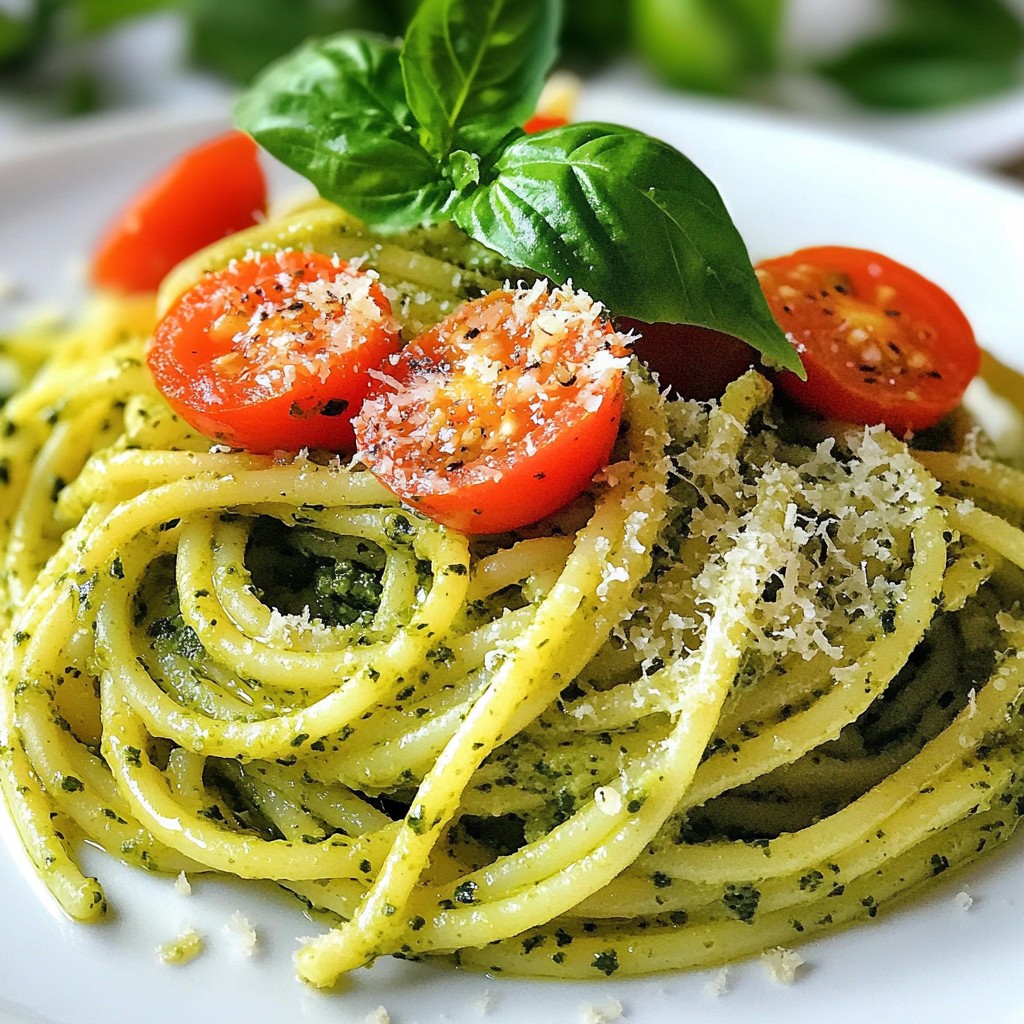
Are you ready to elevate your pasta night? This Classic Basil Pesto Pasta recipe is simple, fresh, and bursting with flavor. Made from vibrant basil, robust garlic, and creamy cheese, it comes together in no time. I'll guide you step by step to create a dish that wows your family and friends. Keep reading to discover ingredients, tips, and variations to make this meal your own!
Why I Love This Recipe
- Fresh Ingredients: The use of fresh basil and high-quality olive oil elevates the flavor, making each bite a burst of freshness.
- Quick and Easy: This dish can be prepared in just 25 minutes, perfect for a weeknight dinner or a last-minute gathering.
- Customizable: You can easily adjust the ingredients, adding more nuts or cheese based on your preference, or even incorporating vegetables.
- Beautiful Presentation: The vibrant green pesto and colorful cherry tomatoes make this dish not only delicious but visually appealing as well.
Ingredients
Main Ingredients for Classic Basil Pesto Pasta
- 400g spaghetti or your preferred pasta type
- 2 cups fresh basil leaves, tightly packed
- 1/2 cup high-quality extra virgin olive oil
Additional Flavor Enhancers
- 1/3 cup pine nuts, toasted to a light golden color
- 1/2 cup freshly grated Parmigiano-Reggiano cheese
- 3 cloves garlic, finely minced
Garnishes
- Cherry tomatoes, halved (for garnish)
- Additional fresh basil leaves (for garnish)
In my kitchen, fresh basil is key for great flavor. I use two cups of tightly packed leaves. They give the pesto its classic taste. The pasta choice is important too. I love using spaghetti, but you can pick any pasta you like.
Next, I add extra virgin olive oil. I use half a cup of high-quality oil. It creates a creamy texture and rich flavor. Pine nuts are also a must. Toasting them brings out their nutty taste. I recommend one-third cup of these little gems.
For that savory kick, I add Parmigiano-Reggiano cheese. Half a cup is just right. It makes the pesto taste rich and cheesy. Lastly, I use three cloves of garlic. This gives the dish a nice zing.
To make the dish pop, I garnish it with cherry tomatoes. Halving them adds color and sweetness. Fresh basil leaves on top make it look as good as it tastes.
Step-by-Step Instructions
Cooking the Pasta
To start, you need to prepare the salted water. Grab a large pot and fill it with water. Add a generous pinch of sea salt. Bring it to a rolling boil. The salt will season the pasta well.
Next, cook the spaghetti. Add the pasta to the boiling water. Follow the package instructions for the cooking time. You want it to be al dente, which means firm but not hard. Before draining, remember to reserve 1 cup of the pasta cooking water. This will help later. Drain the pasta once it’s cooked and set it aside.
Making the Pesto
Now, let's make the pesto. In your food processor, add the fresh basil leaves. Use about 2 cups, packed tightly. Next, add the toasted pine nuts. These should be about 1/3 cup. Then, include the freshly grated Parmigiano-Reggiano cheese, about 1/2 cup, and 3 minced garlic cloves.
Pulse the mixture a few times. You want everything finely chopped and mixed well. Now, it’s time to emulsify the pesto. With the food processor on, slowly pour in 1/2 cup of extra virgin olive oil. This should be a steady stream. Keep blending until the mix is smooth and creamy. If it feels too thick, add some reserved pasta water. This will help you get the right consistency. Finally, season with sea salt and black pepper for flavor.
Combining Pasta and Pesto
Now, it’s time to combine the pasta and pesto. In a large mixing bowl, gently add the drained pasta. Pour in the freshly made pesto. Toss everything together until the pasta is well-coated. If the sauce looks too thick, add a little reserved pasta water. Do this slowly until it feels just right.
Your Classic Basil Pesto Pasta is now ready to enjoy! Serve it warm and consider garnishing it with halved cherry tomatoes and some fresh basil leaves for added flair.
Tips & Tricks
Achieving Optimal Flavor
Using fresh ingredients is key. Fresh basil leaves add a bright taste. They make your pesto pop with flavor. Choose basil that is vibrant and fragrant. This makes a big difference in your dish.
Toasting pine nuts enhances their taste. Heat them in a pan on low. Stir them often until they turn light golden. This brings out their rich, nutty flavor. You will notice the difference in your pesto.
Perfecting the Pesto Consistency
Using reserved pasta water is a smart trick. It helps thin out your pesto if it’s too thick. Just add a spoonful at a time. Mix well until you reach your perfect texture. This water has starch, which helps the sauce cling to pasta.
Avoid making your sauce too thick. It should be creamy but flow easily. If you find it thick, adjust with more pasta water. The right consistency makes every bite delightful.
Presentation Tips
Garnishing adds visual appeal. Halved cherry tomatoes not only look good, but they add a fresh taste. Scatter them over your pasta just before serving. A few extra basil leaves can brighten the dish too.
Serving with crusty bread is a great choice. It complements your pasta well and makes the meal feel special. Drizzle a little olive oil on top for an extra touch. This simple step elevates your dish and entices your guests.
Pro Tips
- Use Fresh Basil: The flavor of your pesto will greatly depend on the freshness of the basil. Look for vibrant green leaves without any browning for the best taste.
- Toast Pine Nuts: Toasting the pine nuts enhances their flavor and adds a delightful crunch. Just be careful not to burn them; a light golden color is perfect.
- Adjust Consistency: If your pesto is too thick, don’t hesitate to add more reserved pasta water gradually. This will help achieve a silky smooth sauce that clings beautifully to the pasta.
- Enhance with Lemon: For a bright, zesty flavor, consider adding a squeeze of fresh lemon juice to your pesto. It balances the richness and brings all the flavors together.
Variations
Alternative Nuts
You can use different nuts in your pesto. Instead of pine nuts, try walnuts or pecans. Both nuts add a unique taste. Walnuts give a rich flavor, while pecans offer a sweet touch. Toast them lightly to boost their flavors. This small step makes a big difference in taste.
Vegan Options
If you want a vegan version, skip the cheese. You can use nutritional yeast instead. It adds a nice cheesy flavor without dairy. This swap keeps your pesto creamy and tasty. You'll still enjoy that classic taste without animal products.
Additional Ingredients
To make your pesto even more special, add spinach or arugula. These greens add color and nutrients. They also give a fresh twist to the dish. Another great addition is lemon juice. A squeeze of lemon brings brightness and balances the flavors. Both ideas enhance your classic basil pesto pasta in fun ways.
Storage Info
Storing Leftovers
To keep your Classic Basil Pesto Pasta fresh, use airtight containers. Glass or plastic containers work well. Make sure they seal tightly. You can store the pasta in the fridge for up to three days. If you want to keep it longer, freeze it. Frozen pasta lasts about two months.
Reheating Tips
When you reheat pasta, the microwave is quick and easy. Place the pasta in a bowl and add a splash of water. Cover it to trap steam and heat it for one to two minutes. Stir halfway to heat evenly. You can also use a skillet on low heat. Add a bit of olive oil or reserved pasta water to keep it moist. This helps the sauce blend back in.
Pesto Storage
For leftover pesto, store it in a small jar. Pour a thin layer of olive oil on top. This keeps the pesto fresh and bright green. You can also freeze pesto for later. Use ice cube trays to freeze small portions. Once frozen, transfer the cubes to a freezer bag. This way, you can use just what you need for future dishes.
FAQs
What type of pasta is best for pesto?
You can use many types of pasta for pesto. I recommend spaghetti for its great texture. Other good options are fettuccine, linguine, or even penne. These shapes hold the sauce well. If you prefer gluten-free, choose a rice or chickpea pasta. Each type brings a unique taste to the dish.
Can I make pesto in advance?
Yes, you can make pesto ahead of time. This is great for saving time. Prepare the pesto and store it in an airtight container. You can keep it in the fridge for up to a week. To keep it fresh, drizzle a little olive oil on top before sealing. This helps slow down oxidation.
How do I store leftover pesto?
Store leftover pesto in the fridge or freezer. For the fridge, use a clean, airtight container. It will last up to a week. If you want to keep it longer, freeze it. Freeze pesto in ice cube trays for easy portions. Once frozen, transfer the cubes to a freezer bag. This way, you can thaw just what you need later.
This blog post covered making classic basil pesto pasta. We explored the key ingredients, like fresh basil and garlic, and how to cook the pasta perfectly. You learned simple steps for making pesto and combining it with your pasta. We also shared tips for enhancing flavor and storing leftovers.
In closing, fresh ingredients and attention to detail make this dish shine. Enjoy your delicious pesto pasta and get creative with variations!